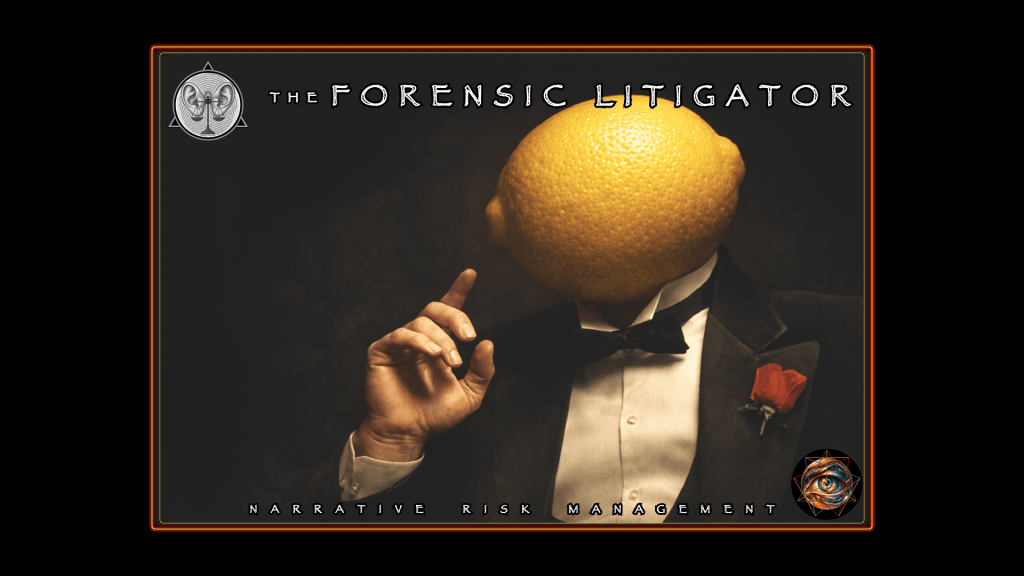
Don Lemon probably believed he was defending his journalistic integrity when he appeared on camera after the January 18, 2026 disruption of Sunday worship at Cities Church in St. Paul. He had just livestreamed what protesters called “Operation Pullup,” an invasion of a sanctuary where thirty to forty activists blew whistles, chanted slogans, and forced the congregation to abandon their service. The former CNN anchor might have claimed neutrality, insisted he was merely documenting civil disobedience, and let his footage speak for itself.
He did not.
“There is a certain degree of racism there and there’s a certain degree of entitlement,” Lemon explained, describing the worshippers whose service he had just helped disrupt. “I think people who are, you know, in the religious groups like that. It’s not the type of Christianity that I practice, but I think that they’re entitled and that entitlement comes from a supremacy, a white supremacy.”
Confession Disguised As Commentary
Within forty-eight hours, the Justice Department announced an investigation into potential violations of two federal statutes: the Freedom of Access to Clinic Entrances Act and the conspiracy against rights provision commonly called the KKK Act. Assistant Attorney General Harmeet Dhillon dispatched prosecutors to Minneapolis and appeared on national television to put Lemon “on notice.” Attorney General Pam Bondi personally called the church’s pastor to promise prosecution.
Lemon had handed federal prosecutors something they rarely receive: a defendant who explains, on camera, why his victims deserved what they got.
The FACE Act requires proof that defendants “intentionally interfere with any person lawfully exercising the First Amendment right of religious freedom at a place of religious worship.” Proving intent is ordinarily the prosecutor’s heaviest burden. Lemon lifted that weight himself. He identified the congregation’s religious beliefs as the reason they warranted disruption. He distinguished their faith from his own. He attributed their presence at Sunday worship to an ideology he considered worthy of confrontation. The intent element, which defense attorneys spend months trying to obscure, emerged from the defendant’s own mouth with uncomfortable precision.
The irony that structures this case is not incidental. The same legal machinery that imprisoned pro-life activists for singing hymns outside abortion clinics now threatens a former cable news anchor for livestreaming what he considered righteous resistance. A statute championed by Edward Kennedy and signed by Bill Clinton to protect Planned Parenthood has become the instrument of a Trump administration determined to demonstrate that religious liberty cuts across ideological lines. The law’s viewpoint neutrality, which eight circuit courts affirmed against constitutional challenge, ensures that the doctrine developed to punish one movement’s civil disobedience applies with equal force to another’s.
The Statute That Reaches Churches
The Freedom of Access to Clinic Entrances Act carries a name that obscures its scope. Congressional debate in 1994 focused almost exclusively on protecting abortion providers from Operation Rescue and similar organizations whose members blockaded clinic entrances, harassed patients, and occasionally committed violence. The statute’s common abbreviation reinforces this association; lawyers and journalists refer to it as the FACE Act, shorthand suggesting its application begins and ends with reproductive health facilities.
The text tells a different story. Section 248(a)(2) of Title 18 criminalizes conduct that “by force or threat of force or by physical obstruction, intentionally injures, intimidates, or interferes with any person lawfully exercising or seeking to exercise the First Amendment right of religious freedom at a place of religious worship.” The provision appears in the same sentence that protects clinic access, connected by a semicolon, equal in statutory weight.
Notice the disjunctive construction. The government need not prove force, nor even the threat of force; physical obstruction alone suffices. It need not prove injury, nor intimidation, either; interference alone completes the offense. The statute defines these terms with precision that favors prosecutors. “Physical obstruction” includes “rendering passage to or from a place of religious worship unreasonably difficult or hazardous.” When protesters occupy a sanctuary, block aisles, and force congregants to navigate around them or remain frozen in place, they satisfy this element regardless of whether anyone is physically touched. “Interfere with” means “to restrict a person’s freedom of movement.” Congregants who cannot reach the altar for communion, cannot exit their pews freely, or cannot continue their worship service have experienced interference within the statute’s meaning.
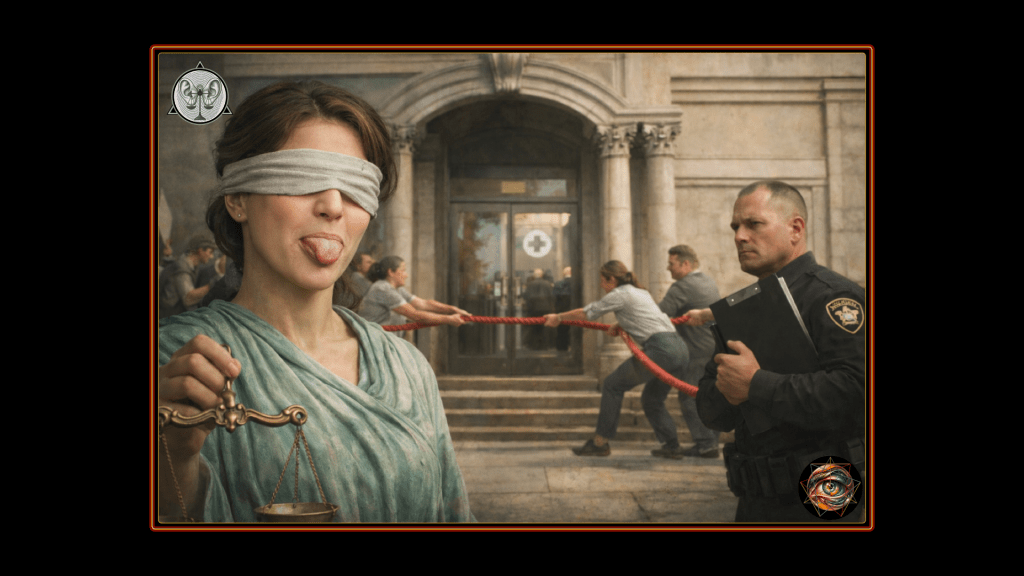
The penalty structure reflects congressional seriousness.
First offenses carry up to one year imprisonment. Subsequent offenses permit three years. When bodily injury results, the ceiling rises to ten years. Special provisions address nonviolent physical obstruction: six months and a ten-thousand-dollar fine for first offenses, eighteen months and twenty-five thousand dollars for repeat violations. These graduated penalties allow prosecutors to calibrate charges to conduct while maintaining substantial sentencing exposure even for defendants who commit no violence.
Civil remedies compound the criminal exposure. The statute creates a private right of action for individual worshippers and the religious entity itself. Available relief includes compensatory and punitive damages, attorney fees, and statutory damages of five thousand dollars per violation in lieu of actual damages. A congregation of one hundred worshippers represents potential statutory exposure exceeding half a million dollars before any compensatory or punitive award. The protesters who invaded Cities Church face not only the DOJ but also the prospect of individual lawsuits from every person whose Sunday worship they disrupted. Lemon, if found to have participated in the conspiracy, shares that exposure under theories of joint and several liability.
The constitutional validity of this scheme is settled. Eight federal circuits have rejected challenges to the FACE Act. The Supreme Court has declined to hear appeals on three occasions. Courts emphasize that the statute targets conduct rather than speech and applies with viewpoint neutrality. The same provision that shields Planned Parenthood from blockades shields Baptist congregations from invasions. That symmetry is not an accident of drafting; it is the constitutional foundation on which the statute survives First Amendment scrutiny.
The Conspiracy Statute That Needs No Overt Act
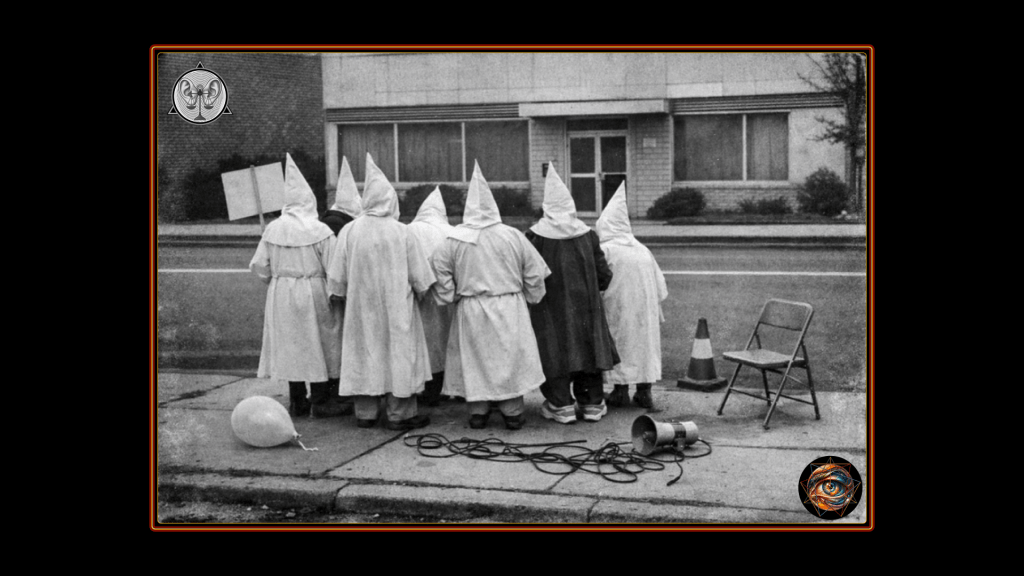
The Justice Department’s investigation extends beyond the FACE Act to 18 U.S.C. § 241, the conspiracy against rights statute. The common name, the KKK Act, is not rhetorical flourish. Congress enacted Section 6 of the Enforcement Act of 1870 specifically to combat Ku Klux Klan violence against freed slaves exercising their constitutional rights, including the right to worship without terroristic interference. The statute punishes anyone who conspires “to injure, oppress, threaten, or intimidate any person in the free exercise or enjoyment of any right or privilege secured to him by the Constitution or laws of the United States.”
The maximum sentence is ten years.
Section 241 possesses a feature that distinguishes it from the general federal conspiracy statute and that Lemon’s defense attorneys will find exceptionally dangerous. Under 18 U.S.C. § 371, the catchall conspiracy provision, prosecutors must prove that at least one conspirator committed an overt act in furtherance of the conspiracy. The overt act need not itself be criminal; renting a vehicle, purchasing supplies, or sending a planning email all qualify if done to advance the conspiratorial objective. This requirement provides defendants a procedural protection: if no conspirator takes any concrete step beyond mere agreement, the conspiracy charge fails.
Section 241 contains no such requirement.
The agreement and the requisite intent constitute the completed offense. Federal courts have repeatedly confirmed this distinction in contexts ranging from civil rights violations to election fraud. The practical consequence is substantial. Prosecutors need not prove that Lemon personally blocked any entrance, chanted any slogan, or blew any whistle. They need not prove he entered the church building at all. They need only prove that he agreed with the organizers to disrupt religious worship and that he possessed the specific intent to interfere with the congregants’ constitutional rights. The conspiracy crystallizes at the moment of agreement. Everything that follows is evidence of the agreement’s existence, not an element the government must independently establish.
The Seventh Circuit’s decision in United States v. Nathan provides the doctrinal framework for proving intent. The court held that specific intent to injure constitutional rights can be inferred when such injury “follows inevitably from” the defendants’ conduct. Direct evidence that defendants consciously thought “I am violating their First Amendment rights” is unnecessary. Acting in “reckless disregard” of those rights suffices. A defendant who knows that planned conduct will prevent congregants from worshipping, and who proceeds anyway, possesses the requisite intent even if he frames his purpose in other terms.
Lemon’s statements satisfy this standard with room to spare.
His pre-incident acknowledgment that protesters planned to “surprise people, catch them off guard, and hold them to account” establishes knowledge that the operation would disrupt normal activity. His post-incident explanation that the congregation practiced a form of Christianity he found objectionable establishes that he understood the disruption to target religious exercise specifically. The gap between knowledge and intent collapses when the defendant explains why the victims deserved what occurred.
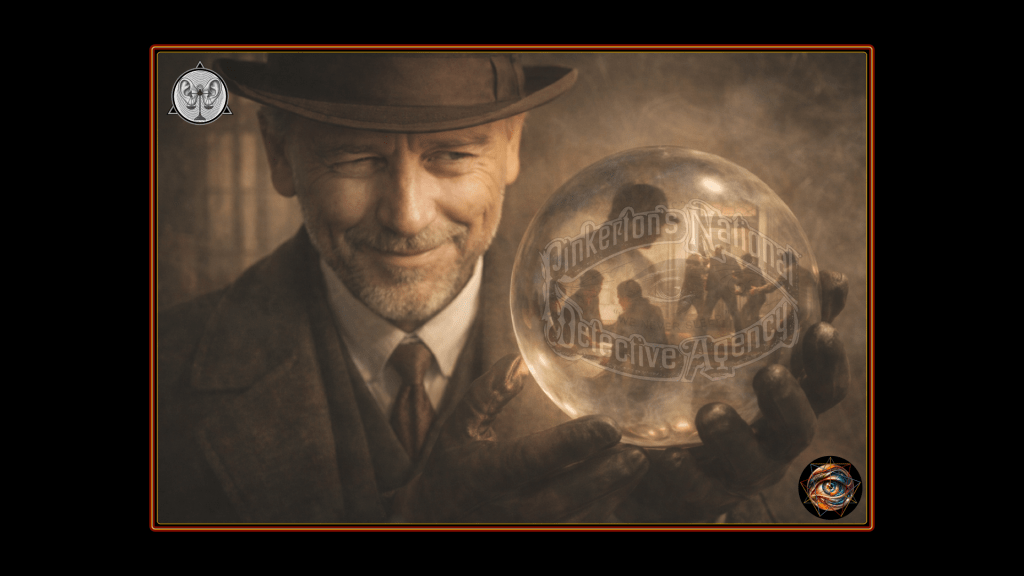
The Pinkerton doctrine magnifies his exposure. Under Pinkerton v. United States, a conspirator bears liability for all foreseeable substantive offenses committed by co-conspirators in furtherance of the conspiracy, even if the defendant did not directly participate in those specific acts. If Lemon joined the conspiracy through pre-incident coordination, he shares responsibility for every FACE Act violation committed by every protester who entered that sanctuary. Thirty to forty activists, each committing interference with religious exercise against dozens of congregants, generates a multiplication of liability that his attorneys cannot contain through arguments about his personal conduct. The conspiracy makes him responsible for the conspiracy’s fruits.
The Architecture of Self-Incrimination
The protesters who invaded Cities Church claimed a grievance. Eleven days earlier, on January 7, 2026, ICE agent Jonathan Ross shot and killed Renee Nicole Good, a thirty-seven-year-old United States citizen and mother of three, during an enforcement operation in Minneapolis. Video evidence showed Ross firing three shots through Good’s windshield at close range as she turned her steering wheel away from him. The Trump administration’s Justice Department declined to investigate the shooting, inflaming community outrage. Protesters explicitly invoked Good’s name during the church disruption, chanting “Justice for Renee Good” alongside “ICE out.”
Their target was Pastor David Easterwood, one of eight pastors at Cities Church, who serves simultaneously as Acting Field Office Director for ICE Enforcement and Removal Operations in St. Paul. The dual role made him, in the protesters’ view, a legitimate target for confrontation. Civil rights attorney Nekima Levy Armstrong organized the operation and later posted on social media thanking co-organizers and listing supporting groups.
None of this context provides legal defense.
The FACE Act does not contain an exception for protesters with legitimate grievances against persons who happen to be present in a house of worship. The statute protects “any person lawfully exercising the First Amendment right of religious freedom,” not “any person whose conduct the protesters find unobjectionable.” Easterwood’s role at ICE is irrelevant to the legal analysis. The congregants surrounding him, the families with children, the elderly parishioners, the choir members and ushers, none of them bore any connection to immigration enforcement. They came to worship. The protesters came to disrupt worship. The motive for disruption does not transform the disruption into protected activity.
Lemon’s legal exposure assembled itself in layers. Each reinforces the others until the prosecution’s case achieved a coherence his attorneys will struggle to dismantle. Work backward from the moment he attacked the congregation’s faith.
That statement established not merely that Lemon held unflattering views about the worshippers but that he understood the disruption to target their religious identity. He did not describe the protest as opposition to immigration policy, criticism of a government official who happened to attend church, or civil disobedience against federal enforcement practices. He described it as confrontation with people whose Christianity he found objectionable. He named religion as the axis of conflict. He specified that their faith differed from his own, implying that the difference justified the intrusion.
Prosecutors rarely receive such unambiguous evidence of discriminatory intent.
Move backward to the disruption itself. Lemon was present in the sanctuary during the invasion. He filmed the confrontation. He conducted interviews with participants. His livestream reached an audience the protesters presumably sought; maximum visibility was the operational objective, and his platform delivered it. The question of whether his presence constituted journalism or participation cannot be resolved by reference to his subjective self-understanding. Courts examine conduct, not self-conception. Providing real-time broadcast to thousands of viewers plausibly constitutes material assistance to the conspiracy regardless of whether Lemon considered himself a neutral observer.
Move backward further to his pre-incident statements, and the conspiracy element crystallizes.
“Our resistance protesters are planning an operation that we’re going to follow them on,” Lemon announced before the disruption. “I can’t tell you exactly what they’re doing, but it’s called Operation Pullup … where they surprise people, catch them off guard, and hold them to account.” He continued: “They’re getting the operation together. Again, this is an operation that is secret that they invited folks out. Can’t tell you what is going to happen, but you’re going to watch it live unfold here on the Don Lemon Show.”
The first-person plural possessive adjective “our” is not dispositive, but it does complicate any claim of journalistic distance. More damaging is the acknowledgment of secrecy, surprise, and operational coordination. Lemon knew the protesters planned an action designed to catch targets “off guard.” He understood the location to be secret. He knew he had been “invited” into the operation rather than simply choosing to cover a public event. He promised his audience they would “watch it live unfold,” language suggesting he understood himself to be part of the unfolding rather than merely its chronicler.
A journalist embedded with protesters covering a permitted march on public streets possesses different legal exposure than a journalist who receives advance operational briefings, maintains secrecy about the target, accompanies the group onto private property, and broadcasts the invasion in real time.
The Enforcement Landscape He Entered
Lemon walked into a prosecutorial environment shaped by four years of vigorous FACE Act enforcement against his ideological opposites. The Biden Justice Department initiated more than fifteen prosecutions under the statute, predominantly targeting pro-life activists who blockaded abortion clinic entrances. The defendants in these cases engaged in conduct structurally identical to what occurred at Cities Church. They entered facilities without permission. They occupied space to prevent normal operations. They refused to leave when instructed. They disrupted activities protected by federal law.
Lauren Handy blockaded the Washington Surgi-Clinic in 2020. She sat in the entrance. She sang hymns. She prayed. No violence occurred. No property was damaged. She received fifty-seven months imprisonment.
Paul Vaughn and five co-defendants blockaded a clinic in Mount Juliet, Tennessee. They sat in hallways and sang. The government combined FACE Act violations with conspiracy charges to seek sentences exceeding ten years. Seven defendants in Michigan blockaded Northland Family Planning Clinic. They linked arms and refused to move. The same statutory framework, the same conspiracy theory, the same sentencing exposure now confronts the Cities Church protesters.
Congressional investigators documented the enforcement disparity with precision. A letter signed by eight members of Congress in May 2024 noted that 108 Catholic churches and 78 pregnancy resource centers were attacked following the leak of the Dobbs decision. Protesters vandalized sanctuaries, spray-painted threats, shattered windows, and in several cases committed arson. The Justice Department opened three FACE Act cases in response.
It had never used the statute to prosecute anyone for blocking access to a church or house of worship in the thirty years since its enactment.
When pro-Palestinian protesters interrupted Easter Vigil Mass at St. Patrick’s Cathedral in March 2024, running to the altar and shouting during the service, New York police detained them briefly and released them without bail. No federal charges followed. The protesters faced no consequences beyond a few hours of inconvenience. The pattern was unmistakable: vigorous prosecution when abortion clinics faced disruption, studied indifference when churches and synagogues were invaded.
The Trump administration’s response to Cities Church inverted this pattern within hours.
Dhillon announced the investigation on the day of the disruption. She dispatched prosecutors immediately. Bondi promised prosecution personally. President Trump labeled the protesters “agitators and insurrectionists.” The machinery of federal enforcement, dormant when houses of worship faced disruption under the previous administration, activated with conspicuous speed and highly public commitment.
Lemon’s defense attorneys will argue selective prosecution. They will point to the enforcement disparity and claim their client faces charges only because the current administration wishes to punish a prominent critic. The argument has doctrinal support; selective prosecution violates equal protection when defendants demonstrate that similarly situated individuals were not charged and that the selection rested on impermissible criteria such as political viewpoint.
The problem is that the Biden administration’s prosecutions established the benchmarks against which Lemon’s conduct will be measured.
Pro-life activists received multi-year sentences for nonviolent clinic blockades. Lemon participated in a nonviolent church invasion. The statutory framework is identical. The conduct is analogous. The conspiracy theories prosecutors developed against abortion clinic protesters apply with equal force to protesters who invade sanctuaries. The sentences imposed on ideological opposites become the floor, not the ceiling, for his potential punishment. His attorneys cannot argue that nonviolent disruption warrants leniency without confronting the grandmothers who went to federal prison for singing hymns.
The Fracture in the Shield
Journalists embed with combatants, criminals, and protesters without routinely facing prosecution. War correspondents travel with military units that commit atrocities. Investigative reporters cultivate relationships with sources engaged in ongoing criminal enterprises. Documentary filmmakers record illegal conduct from insider vantage points. The practice is not merely tolerated but celebrated; Pulitzer Prizes have been awarded for work that required proximity to lawbreaking.
The tradition rests on a distinction between observation and participation that Lemon’s conduct may have collapsed.
A journalist who witnesses a crime possesses no obligation to prevent it and no liability for failing to intervene. Passive presence, even with foreknowledge, does not constitute conspiracy. The Supreme Court held in Cohen v. Cowles Media Co. that “generally applicable laws do not offend the First Amendment simply because their enforcement against the press has incidental effects on its ability to gather and report the news.” Trespass, conspiracy, and civil rights violations are generally applicable laws. Press credentials provide no immunity from their reach. Mere coverage of illegal activity, however, while standing alone, does not make the journalist a participant.
The question is where coverage ends and participation begins.
The Justice Department has previously advanced controversial theories on this boundary. In 2011, the department named Fox News reporter James Rosen an unindicted co-conspirator in an Espionage Act case for allegedly soliciting classified information from a State Department official. The government characterized Rosen as an “aider and abettor and/or co-conspirator” based on his cultivation of the source and his requests for specific information. Press freedom organizations condemned the theory as criminalizing standard journalism practices. The case became a cautionary tale about prosecutorial overreach, and the charges were never filed.
Lemon’s situation differs in texture. Rosen solicited information that a source chose to provide; his conduct involved receiving and publishing material, the core function of journalism. Lemon received advance notice of a planned criminal operation, accompanied the perpetrators to the scene, documented its execution, broadcast it to amplify its impact, and offered post-incident commentary explaining why the targets deserved disruption. The former involves passive receipt of information. The latter involves active integration into an operational plan whose success depended partly on the visibility his platform provided.
Private property compounds the problem. Churches are not public forums. They are private spaces where the owners control who may enter and what activities may occur. The Supreme Court held in Lloyd Corp. v. Tanner that the First Amendment does not guarantee access to private property for speech purposes, even property that functions as a gathering place. Protesters possess no constitutional right to occupy a sanctuary. Journalists possess no constitutional right to accompany them. The claimed interest in confronting a government official provides no exception; Easterwood was present as a worshipper, not in his official capacity, and the other congregants bore no connection to ICE whatsoever.
Lemon’s post-incident statements transform a difficult case into a manageable one for prosecutors. Had he remained silent, or limited his commentary to factual description, his defense would rest on the ambiguity inherent in embedded journalism. The line between documenting civil disobedience and facilitating it has never been drawn with precision, and that ambiguity would favor the defendant in a criminal prosecution requiring proof beyond reasonable doubt.
By explaining that the congregation deserved disruption because of “the type of Christianity” they practice, he eliminated the ambiguity.
The disruption targeted religious exercise. He approved of that targeting. He distinguished his own faith from theirs, implying the difference justified what occurred. These statements do not merely damage his defense; they supply the element his defense was designed to contest. The intent to interfere with religious freedom, ordinarily proven through circumstantial evidence and reasonable inference, stands established by the defendant’s own words in his own voice on his own broadcast.
The Precedent He May Create
The coming prosecution, if it proceeds, will force federal courts to articulate the boundary between journalism and conspiracy with a precision the law currently lacks. Existing doctrine offers guideposts but not a map. Courts have held that generally applicable laws bind journalists. Courts have held that the First Amendment does not protect criminal conduct merely because the defendant claims journalistic purpose. Courts have not confronted a case combining advance operational coordination, real-time broadcast amplification, presence on private property during the offense, and post-incident statements establishing discriminatory intent against the victims’ religious practice.
Lemon may lose the case and still shape the doctrine.
A conviction would establish that journalists who receive advance briefings on planned illegal operations, who maintain secrecy about targets, who accompany perpetrators onto private property, and who broadcast the conduct to serve the operation’s visibility objectives have crossed from observation into participation. Future journalists would adjust their practices accordingly. Embedding would require more care, more distance, more attention to the line between documenting a story and becoming part of it. Press freedom advocates would condemn the precedent as chilling, but the chill would operate precisely where the government claims it should: at the boundary between journalism and criminal facilitation.
An acquittal would establish different boundaries. If Lemon’s conduct falls within protected journalism despite the advance coordination, the secrecy, the presence on private property, and the post-incident ideological justification, then the zone of protection extends further than prosecutors assumed. Future defendants in similar positions would invoke his case. Future prosecutors would hesitate before charging journalists whose conduct resembles his. The embedding tradition would receive validation, but the validation would cover practices that many journalists might consider ethically dubious even if legally protected.
Either outcome transforms the legal landscape in ways the facts of this case merely set in motion.
The deeper irony is that Lemon’s prosecution arises from a statute designed to protect causes he presumably supports, enforced by an administration he manifestly opposes, using doctrines developed against movements whose values he does not share. The FACE Act exists because Congress believed that access to reproductive health services and freedom of religious worship both deserve federal protection from physical interference. The KKK Act exists because Congress believed that constitutional rights require protection from conspiratorial violation. Neither statute contains an exception for defendants who consider their cause righteous or their targets deplorable.
Lemon built the government’s case himself, statement by statement, from foreknowledge through facilitation to ideological confession. The architecture of his liability is his own construction. Whether he is convicted or acquitted, the case he created will instruct future journalists, prosecutors, and protesters about where the law draws lines that the First Amendment does not erase. The prosecutor’s gift was not merely evidence. It was a vehicle for doctrine that will long outlast the sentence.

Leave a comment