
Constitutional rights have a zip code, which most people learn only after they are already in court. The federal appeals courts divide the country into distinct legal territories—regional, functional, and subject-matter—where the same constitutional guarantee can protect you completely in one state and fail you entirely in the next, not because the law changed, but because the judges did. Presidential appointments, regional political culture, and decades of industrial money have been quietly building these divergences until the gap between circuits is wider now than at any point since the civil rights era. Understanding which circuit governs your state, what it has historically protected, and where its fault-lines are cracking may be the difference between filing a case and winning one. Geography determines the settlement offer, whether the police officer gets away with misconduct, or whether the company pays or walks. These courts have produced distinct legal cultures, and the country has spent a century pretending the map does not matter.
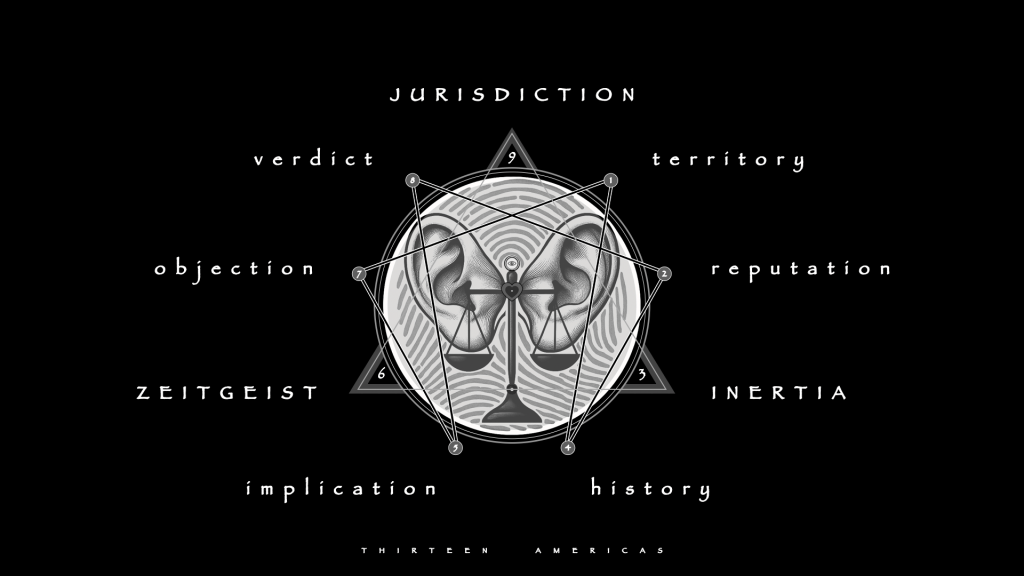
Geography not only locates justice in a literal drawing of courthouse territory, but classifies it, too. Thirteen appellate courts now form the working map: eleven regional circuits, one court of federal machinery, and one court of subject-matter expertise. The current system is a routing diagram that determines which precedent attaches before any facts are heard, whether injuries arrive as constitutional questions or administrative problems, and which are priced out before any judge writes a word. The diagram has no author in the conspiratorial sense; it accumulated through appointments, reversals, retirements, and the slow calcification of regional habit into doctrine. Its effects, however, are indistinguishable from design.
The Fourth Circuit Keeps a Machine Running in a Basement No Election Reaches
The Fourth Circuit hears its arguments in Richmond, in a courthouse named for Lewis F. Powell, in the city that once served as the capital of the Confederacy. Powell sat on the Supreme Court, and before that he wrote a 1971 memorandum urging corporate America to organize itself politically and legally against the reforms of the age. The building, the city, and the man on the door are not decoration. They are the foundation on which everything else rests.
Across four decades the court that sat in that building was the most reliably conservative appellate bench in the country. Then a run of appointments under President Obama flipped it, and the same Richmond court began handing down some of the most progressive rulings in the federal system, until appointments under President Trump pulled it back toward an uneasy split. The usual telling of the Fourth Circuit is a story of transformation, of a house that changed hands and changed character.
That telling is true only of the floors with windows. Beneath them runs a machine no candidate campaigns on, and no election has ever reached its switch.
Territory
The House Sits on Wealthy Suburbs, Poor Coalfields, and the Apparatus of the Security State
The Fourth Circuit governs Maryland, Virginia, West Virginia, North Carolina, and South Carolina, a territory that runs from the Baltimore waterfront through the Washington suburbs, down across the Appalachian coalfields, and out to the Carolina coastal plains. It holds some of the richest ground in America, in counties like Loudoun, Virginia, where per-capita income has ranked among the highest in the nation, and some of the poorest, in the West Virginia coalfields and the eastern North Carolina tobacco belt. The same court that rules on the fortunes of the wealthy suburbs rules on the survival of communities the wider economy abandoned more than a generation ago.
The federal docket carries that whole range in a single load. Immigration-detention cases from the enforcement machinery clustered in Northern Virginia sit beside civil-rights claims from the historically Black communities of South Carolina, environmental fights from the coalfields, and national-security matters from the agencies headquartered in the Washington suburbs. No other circuit has the security state living quite so literally in its backyard.
A house this large contains rooms that barely speak to one another. The wing where a hedge fund argues a contract and the wing where a detainee argues for his freedom share a roof, a clerk’s office, and a body of precedent, and the same judges move between them, carrying the habits of one into the other. The architecture is single. The lives inside it are not.
The house metaphor earns its keep when the geography is made concrete. The upper floors are Loudoun and Fairfax, the wealthiest counties in the country, dense with federal contractors, defense agencies, intelligence offices, and a professional class whose legal disputes concern employment contracts, federal procurement, and the national-security programs the government runs from the Washington suburbs. Those are the floors with light, the floors the national press covers, the floors whose rulings reach cable news within hours of posting. The basement is West Virginia’s coalfields, where black-lung disability claims move through federal courts at a pace the dying cannot afford, and the rural Black communities of eastern North Carolina, where environmental enforcement has been tested and found wanting for decades, and the immigration-detention facilities in Northern Virginia, where people contesting their removal are held in conditions that have generated their own body of contested litigation. The same building processes it all. The routing diagram sends each claim to the floor where the applicable doctrine lives, and the floors have very different ceilings.
Reputation
The Court Reversed Itself While the Country Watched
Until roughly 2010 the Fourth Circuit’s reputation was settled and unambiguous. It ruled against habeas petitioners, against civil-rights plaintiffs, against environmental enforcement, and in favor of executive power in the national-security cases, and its signature was deference, a reflexive bow to states, to agencies under Republican administrations, and to trial courts in ways that sealed death sentences against any real federal review. A litigant who drew this circuit on the wrong side of any of those questions had, in practice, already lost.
The decor on the upper floors then changed completely. The new majority assembled under Obama began issuing rulings on voting rights, marriage, and transgender students that ranked among the most protective in the country, and it issued them from Richmond, from the one address the conservative legal establishment had always assumed was safe. Corporate defense teams that had treated the Fourth Circuit as a harbor began steering their cases elsewhere when they could.
The reversal was real … and partial. Appointments under Trump pulled the court back toward the center of its own gravity, and the bench that sits in 2026 is genuinely divided, its results in contested cases turning on which judges hear them. The house has been redecorated twice in fifteen years, and the furniture that arrives with each new majority is hauled out again with the next.
The public overread the transformation because it could only see the floors with windows. Rights-expanding rulings on voting, marriage, and gender have visible plaintiffs, cultural stakes, and press coverage commensurate with both. They produce the images that travel: a couple married at a courthouse, a student allowed to use a bathroom, a voting map thrown out. Habeas doctrine produces none of those images. It produces denials, filed in cases whose names are known only to the lawyers and the condemned, resolving claims through procedural holdings that are technically defensible and functionally impenetrable. A death-penalty ruling that says the claim was procedurally defaulted does not generate a photograph. Neither does a ruling that says the error was harmless. Neither does one that says the state court’s decision, though possibly wrong, was not unreasonable enough to disturb.
The machine runs without generating anything the press can cover, and a machine that cannot be photographed cannot be held accountable by anyone who depends on photographs.
History
Three Men Poured the Foundation, Built the Machine, and Changed the Curtains
The modern character of the court was set in three layers, each laid by a different hand. The first belonged to Clement Haynsworth, the South Carolinian who served as chief judge from 1964 until 1981, and whose nomination to the Supreme Court by President Nixon collapsed on the Senate floor in 1969 amid charges that his record on race and labor was, at best, indifferent to the promise of desegregation. His defeat left the circuit with a reputation for racial insensitivity that it spent the next thirty years trying, unevenly, to shed.
The foundation was poured with that stain already in the concrete.
The second layer was the machine, and the man who built it was J. Harvie Wilkinson III, chief judge from 1996 to 2003 and the most intellectually formidable conservative the circuit produced. Under Wilkinson the court refined a set of procedural doctrines for disposing of habeas petitions that effectively walled state criminal convictions off from meaningful federal scrutiny. The Antiterrorism and Effective Death Penalty Act of 1996 handed the circuit a fresh set of levers, and Wilkinson’s court pulled them without hesitation. A 2016 analysis of the circuit’s capital punishment jurisprudence found that in the thirty-three years following the modern death penalty’s reinstatement, capital habeas petitioners in the Fourth Circuit had prevailed in roughly 6.2 percent of cases, against a national average closer to 40 percent across all circuits over the same period; when limited to cases in which the writ was actually granted, the success rate fell to approximately 3.3 percent.
The machine was installed in the basement, plumbed to the gallows, and left to run.
The machine did not look like a machine because each part had a respectable label. Deference. Exhaustion. Procedural default. Harmless error. Timeliness. Finality. Certificate of appealability. None of those words is sinister alone; each is necessary to keep federal review from becoming endless, and Wilkinson was not wrong that a habeas system with no procedural discipline would collapse under its own volume. His achievement was to arrange the parts into a system in which almost every constitutional claim could be acknowledged and then denied entry. The prisoner did not lose because the Constitution had nothing to say about his situation. He lost because the state court had already said something not unreasonable enough to disturb, because the claim had arrived a day late, because the lawyer had missed the procedurally correct door, because the constitutional error had not prejudiced the verdict in a form the doctrine was built to recognize. The virtue-word for each denial was finality, and finality is a word that sounds like justice to everyone except the person it buries.
The basement machine runs on virtues turned sequentially into locks.
The third layer was Obama, and his appointments did more than shift the court’s votes. They changed its culture on the floors above ground, producing the rulings that made national news precisely because no one expected them from Richmond. The court struck down North Carolina’s voting law after finding that it had targeted Black voters with almost surgical precision. It struck down Virginia’s ban on same-sex marriage. It ruled for a transgender student barred from the restroom that matched who he was.
Those decisions were consequential, and they were, every one of them, work done upstairs.
Implication
The Live Battles Run Through the Upper Floors’ Contested Tenancy and a Detainee’s Secret File
The furniture the Obama appointments installed upstairs is still in the rooms, but its tenure is disputed and its condition is mixed.
In North Carolina State Conference of the NAACP v. McCrory, 831 F.3d 204 (4th Cir. 2016), a three-judge panel permanently enjoined North Carolina’s omnibus election law after finding it had targeted Black voters with discriminatory intent, striking photo ID requirements, reduced early voting, and the elimination of same-day registration under Section 2 of the Voting Rights Act and the Fourteenth Amendment. The ruling stands, and the law it struck is gone, but the Supreme Court’s subsequent decision in Brnovich v. Democratic National Committee tightened the Section 2 standard for future claims, reducing the doctrinal space inside which McCrory‘s reasoning operates. In Bostic v. Schaefer, 760 F.3d 352 (4th Cir. 2014), a 2-1 panel struck Virginia’s same-sex marriage ban on due process and equal protection grounds, a result the Supreme Court absorbed a year later in Obergefell v. Hodges and extended nationally.
In Grimm v. Gloucester County School Board, 972 F.3d 586 (4th Cir. 2020), the court held independently on the merits that a school board’s exclusion of a transgender student from the restrooms matching his gender identity violated both Title IX and the Equal Protection Clause. The Supreme Court denied certiorari in 2021, leaving the Fourth Circuit’s ruling intact but the circuit split unresolved. Each of these decisions was real, consequential, and produced by panel appointments rather than by a reconstituted full court.
Each survives, partially surrounded by doctrine that narrows its reach or leaves its authority uncertain at the national level. The furniture is there. The lease is contested.
The most volatile live fault-line sits where immigration enforcement meets the writ of habeas corpus.
Northern Virginia holds detention facilities packed with people contesting their removal, and in 2025 the case of Badar Khan Suri showed how far the government would go and how the court would answer. Suri, a Georgetown scholar from India married to a Palestinian-American citizen, was seized outside his home after the government claimed his speech on the war in Gaza made him deportable, and the State Department rested the claim on a memorandum it never produced. The government then moved him from Virginia to Louisiana to Texas, a relay that looked designed to drag the case out of any court inclined to hear it. He spent roughly two months in a Texas facility, a thousand miles from his wife and his three young children, before a federal judge in Virginia ordered his release, finding the detention likely punished protected speech. On July 1, 2025, the Fourth Circuit declined to reimpose detention, refusing the government’s request for a stay in a divided ruling whose reasoning targeted the jurisdictional-shuffle tactic directly: allowing officials to shuttle detainees without notice, the majority wrote, would reduce the ancient writ to a game of jurisdictional hide-and-seek.
The questions the case raised, regarding speech as a ground for deportation and the reviewability of removals built on secret findings, remain open, and the cases behind it keep arriving.
The second front is the Fourth Amendment in a circuit that effectively owns the law of government surveillance by the simple accident of housing the agencies and contractors that conduct it. The precedents the court wrote before Congress amended the foreign-intelligence statutes in 2008 built frameworks for surveillance that sit uncomfortably beside the warrant requirement, and a Supreme Court newly interested in digital privacy is steadily exposing the gap. When the high Court held in Carpenter v. United States, 585 U.S. 296 (2018), that the government needs a warrant to track a person through months of cell-site location data, it signaled a turn toward treating digital traces as protected. No published Fourth Circuit opinion has yet applied Carpenter squarely to the surveillance infrastructure the circuit hosts, which is itself a diagnostic: the agencies that operate in the circuit’s backyard conduct their most consequential programs through classified proceedings, executive authorizations, and FISA Court orders that never generate a published appellate record. The gap between Carpenter‘s warrant logic and the surveillance state’s operating assumptions is widening, but the circuit will resolve it, if it resolves it at all, in rooms with no windows and no published opinions.
Surveillance and immigration detention share the same structural dependency. Each practice rests on evidence the subject cannot fully see: the classified surveillance record the target is never shown, the State Department memorandum the detainee is never permitted to read. A court fluent in the vocabulary of intelligence operations is a court that has learned to find the government’s framing of secrecy plausible.
Plausibility is all the government needs when the other side cannot read the file.
Objection
A Windowless Room Decides Whether Secret Evidence Can Hold a Person Indefinitely
The question the Fourth Circuit cannot answer on its own is whether the government may detain a person indefinitely, pending removal to a country that will imprison or harm him, on the strength of classified evidence that neither he nor his lawyer is permitted to see in full. The procedure allows government attorneys to fill the record with material the other side cannot read, cannot test, and cannot rebut. This produces conflicting panel decisions inside the circuit that no one yet has reconciled.
The Suri memorandum was a small, public glimpse of the larger practice. A cabinet officer signs a finding, the finding justifies a detention, and the document itself stays in a drawer the detainee will never open. The stakes are not confined to the length of a confinement, because the removal at the end of it can deliver a person to a government that will jail or torture him, on the strength of a paper he was never allowed to read. Multiply that by the thousands of people moving through the detention system, and the windowless room stops being an exception and becomes a wing of the house.
As the enforcement operation expanded through 2025 and 2026, the Fourth Circuit became the primary judicial backstop for a detention system whose basic fairness is fiercely contested, and the current Supreme Court’s habit of deferring to the executive on national security offers the circuit almost no usable guidance. The court that hears more of these cases than any other has been handed a procedure built to keep the most important evidence out of the light, and asked to call it due process.
Verdict
The Transformation Everyone Debates Happens Only on the Floors with Windows
The Fourth Circuit is a court in genuine transition—another way of saying that no one who governs it or argues before it can say with confidence what it now is. The conservative court Wilkinson built is half dismantled. The progressive court the Obama appointees briefly raised is half reversed. The result is a bench whose outcomes in its hardest cases depend heavily on which judges are drawn to hear them, and in a system where thousands of lives ride on those outcomes, that contingency is not neutrality. It is a failure wearing the robes of procedure.
The deeper trouble lies a floor below where anyone argues. Everything that flips with an election is, by definition, the visible part, the voting rulings and the marriage rulings and the immigration rulings that draw headlines and provoke the next round of appointments. Those are the curtains, and curtains are made to be changed.
The habeas machinery is not curtains. The doctrine Wilkinson assembled for insulating death sentences from review has survived every change of majority above it, because no judge runs for confirmation on the promise of rebuilding the procedures that send the condemned to their deaths faster, and no advocacy group raises money on a fight that abstract. The machine in the basement keeps running in the dark, untouched by the transformations that consume every news cycle, and it goes on producing the outcomes it was built to produce. A court’s most lethal work is always the work that does not reverse, because reversal requires visibility.
The most dangerous room in any house is the one with no windows at all.
What the Fourth Circuit Teaches, the Fifth Complicates
The Fourth Circuit teaches a lesson about where to look. The work that reverses is the visible work, the marriage rulings and voting rulings that flip with each election and draw the next round of appointments. A public trained to watch those floors will never notice the room below them. An institution’s most lethal machinery is the part that survives every change of hands, precisely because no one campaigns on it and no headline can hold it. The Fourth Circuit wins its quietest victories by keeping them out of sight. The court that comes next has discovered it does not need to hide at all.
If the Fourth Circuit wins by being invisible, the Fifth Circuit wins by being early. Its three states, Louisiana, Mississippi, and Texas, form a flood plain engineered so that litigation drains toward a handful of friendly courtrooms whose rulings the full court then gathers up and ratifies. The court has drifted so far right that the conservative Supreme Court above it must repeatedly reach down to stop it, a pattern usually told as an extreme court losing on the merits. That telling misses the mechanism entirely. A flood does not need to win; it needs only to arrive first, and a policy in force for a year does its work whether or not the order authorizing it is later erased.
The power this court holds is power over time, over the gap between the emergency stay it grants today and the correction the Supreme Court rebuilds months or years from now. The human cost of that gap wears a face: Rodney Reed, who has waited on death row for DNA testing the circuit keeps finding ways to deny, drew a dissent from Justice Sotomayor warning that Texas may execute him before anyone learns whose DNA is on the murder weapon. There is a bitter symmetry beneath it all, because the old Fifth Circuit once ran the same play for the powerless, forcing desegregation onto resisting states by moving faster than the resistance could counter. The mechanism is neutral. Only the direction of the water has changed.

Leave a Reply