At 56 years of age to the day and to the very hour as I write this, in the life-threatening shadow of undiagnosable CPTSD, I stand in the wreckage of a future I once believed was reasonable, even probable. Structures I once leaned on, with mind and body, lie broken beyond repair, and the disorientation is as real as it is dangerous. My work now is not to rebuild what was washed away but to recollect whatever can still notice, decide, and create. Day after day I face the truth we men always learn the hard way: survival demands a gruesome act of self-reconstruction that nobody else can perform. On the good days, each deliberate act to pull myself back together feels like an assertion of agency. On the bad days, it is an enraged refusal to disappear. Most days, though, are filed with little more than morbid curiosity. The future has always been uncertain, and somehow I rise again to meet it.
There comes a moment after a relationship ends when a man’s world shifts from becoming gradually unfamiliar to being suddenly completely unrecognizable. It continues to spin, of course, as worlds will, but the problem is that it no longer points anywhere. Time moves forward, wherever that is, but the frame has dissolved. Routines may remain, or they may not, but the axis of meaning is gone … without the mercy of being forgotten.
This collapse is not felt in memory, after all, for the past does not change. What breaks is the projected continuity between what happened and what was supposed to happen next. It does not matter that no real future was ever guaranteed, for the imagined one had become as inhabited as a mortgaged dream. The lived-in weight of the emotional furniture was real, and therefore so is the loss.
What causes a man the most pain, if not the absence of the other person, his other half?
It is the apparent loss of direction that he lacks, once as obvious as his morning coffee. Icy drafts of midnight air now whistle through the hole where his heart once sat, leaving him utterly restless and perfectly still. Not only were there plans, but there were even plans to make plans within plans. Some version of him was anchored in that forward-leaning life. When that other self forgets where to go, it does not immediately disappear, even if it wants to, because it never needed to know how.
A sense of displacement, not sentimental but systemic, grips the man and, like a rip tide, will not let him go. The pain that follows is not merely emotional. Like a severed arm, whatever part him had begun to live in the future cannot claw its own way back. This state very slowly becomes life-threatening if left unchecked, as the pain mutates from sharp to dull, and any will to live smells like the bait on an even worse trap: survival. Anything other than winning feels like losing.
The fancy name for the pathology of investing emotional capital into an object, a person, or a vision, is cathexis.
In relationships, this fixation extends beyond the individual, attaching itself to an entire imagined life, with all its details great and small—the garden gate, the dinner table, a child’s name—the shared language of private life. Even after all that collapses, the investment remains on the books, inked in blood. Emotions do not withdraw automatically. They spiral. They replay scenes, searching for continuity where none remains. The mind, ever eager to rationalize and find a name, calls it heartbreak, but the body experiences only disorientation.
Some men try to burn it all down fast, seeking closure through elimination. Many believe that if they can erase the memory, they can escape the pain … but experience teaches otherwise. Erasure without retrieval is an unsound move. If the parts of him that were projected into the future are not first retrieved, then the collapse will claim more than the relationship. Without the ability to trust, to cooperate, communal life is impossible. Survival alone is not enough to create any meaning.
A man begins his recovery with a recognition, a visceral recollection, of a self was never lost, but too long misplaced. He might be tempted to forgive if only he could forget, but his work is to re-member, as literally as possible. The work is to retrieve what he left inside the structure that collapsed around him.
This act has an even better name, anamnesis, the re-collection of what is always there.
Now the man who wandered too far into the future hears a call to return where he is needed. The temptation to detach, to let go and not return, remains, but remembering reignites his divine spark of curiosity. It is tempting to confuse longing for rage, or grief, but on close inspection it is exhaustion, the kind that follows hard work. Whatever else it is, it is not apathy. His longing proves that where once was heap of bones, now he has some skin in the game.
Anamnesis disrupts a man’s erasure of “his story” by accepting pain as the price to retrieve the better part of his investment. The future is still gone, but the man himself is no longer missing. For now, that is enough . . .
Zara operates as a structurally agile actor within Southern Oregon’s behavioral health ecosystem, threading between provider and investigator roles across public crisis intervention frameworks. Her institutional trajectory demonstrates dynamic cross-jurisdictional mobility—from India to Oregon—and rapid role transitions spanning frontline mental health crisis response at Options for Southern Oregon to specialized functions as a pre-commitment investigator. Brief service at each node reflects either deliberate career mobility or sector volatility characteristic of community behavioral health; no evidence suggests tenure anomalies or sanction-triggered role shifts. Her system function emerges most visibly at procedural interfaces where state mechanisms (PASRR, pre-commitment investigation) intersect community agency workflows. Available records reveal no high-visibility authorship or broadcast strategies, indicating a low-profile, operationally-integrated exposure pattern. The absence of recorded litigation or detectable asset signals suggests either a risk-averse posture or effective deployment of defensive opacity structures, despite holding roles that carry potential for community or legal controversy.
Visibility Is the Citizen’s Defense
In quantum physics, Schrödinger’s cat exists in a state of superposition—simultaneously alive and dead—until observed. Constitutional rights now operate on the same principle. You may or may not be under arrest. You may or may not have the right to silence. You may or may not be free. The state will not tell you. It will wait to see who is watching.
Miranda rights and Habeas corpus, framed as sacred procedural guarantees, have decayed into conditional performances. They are not deployed because they are owed. They are deployed because someone is watching. Until then, the suspect exists in legal uncertainty—held but not acknowledged, accused but not informed, disappeared but technically documented. Visibility is no longer a safeguard. It is the only force that collapses the state’s ambiguity into action. Without it, the box remains closed, and the citizen inside remains both right-bearing and rightless.
“You can beat the rap, but you can’t beat the ride.”
That phrase, traded in holding cells and echoed in defense offices, expresses the operational truth of American law: procedural form without substantive protection. The legal system portrays itself as responsive to rights, but it behaves according to pressure. When observed, it performs the script. When unobserved, it improvises. What we call civil liberties are not self-executing. They require activation.
That activation must often come from outside the system itself.
Miranda and the Failure of Automatic Protections
Television has misled generations into thinking that Miranda Rights are read at the moment of arrest. In reality, officers are only required to issue a Miranda warning when a suspect is both in custody and under interrogation. If either condition is absent, so is the warning. If the warning is skipped, there is no sanction. The only penalty is the exclusion of the suspect’s statement from evidence—if it ever reaches trial.
The legal system treats Miranda as a filter, not a shield. It protects the admissibility of evidence, not the autonomy of the individual. You can be arrested, questioned informally, and held without ever triggering the warning. And if your words are excluded, the process continues without them. There is no breach, only recalibration. The system logs the omission and moves on.
One case currently under litigation illustrates the absurdity . . .
An individual was arrested by phone, across state lines, without ever being taken into custody or notified in real time. No officer made contact. No warning was issued. Weeks later, a letter arrived by mail confirming the arrest—after the individual had traveled cross-country to find out what had happened. The arrest existed only on paper, the Miranda warning bypassed entirely. The call had already ended. The officer’s own recording confirms it. The rights were neither read nor acknowledged. They remained theoretical, like the cat in the box.
This was not a clerical error. It was a procedural ghost—an arrest that never materialized in physical space, and rights that never collapsed into reality. Only the mismatch between the officer’s report and the actual phone data exposed the contradiction. And still, no violation was formally recorded. Miranda, like the cat, remained in limbo until someone forced the box open.
Habeas and the Disappearing Body
Habeas corpus—the right to appear before a judge when detained—once defined the boundary between a legal state and a carceral one. Now, it survives mostly in theory. The Constitution allows its suspension only during rebellion or invasion, and only by Congress. In practice, the state achieves the same result without declaring anything.
People vanish procedurally.
This disappearance is bureaucratic, not cinematic. A psychiatric hold, for example, can remove someone from public view without ever generating a charge, a hearing, or a docket entry. Initiated by vague reports or safety concerns, the detention is treated as medical, not legal. The body is moved, observed, and managed—but not acknowledged. No lawyer is summoned. No clock starts ticking. The individual exists in custody but not in court.
One example: a legally harassed individual, falsely accused of a crime, experiences acute stress. No arrest is made. No charges are filed. But the person is placed on a psychiatric hold and isolated. There is no hearing. No paperwork. No contact with the outside world. Proving innocence becomes a formality to be handled later. The present condition is custody without classification.
The body exists in superposition—held but not detained, visible to staff but invisible to the law.
Only external action can collapse the uncertainty. A friend records a video, snaps a geotagged photo, and sends a certified letter to legal aid. That composite record does what the Constitution no longer does reliably: it proves the state has the person, and it proves that someone knows it. In that moment, the body reappears—not through habeas, but through visibility. Not through the court, but through evidence.
The Cost of Being Ignored
The legal system permits remedies for violations, but does not pursue them. Qualified immunity filters nearly all misconduct into the category of tolerated error. Officers are not punished for breaking rules unless those rules are already branded “clearly established.” Even then, the standard is whether their actions were “objectively unreasonable.” These thresholds are designed to exclude.
The result is not chaos. It is consistency. Misconduct becomes routinized. Statements may be suppressed. Evidence may be discarded. But the actor continues unbothered. The case may suffer. The system does not. The harm is procedural. The impact is institutional.
Accountability has been replaced with insulation. The officer is not removed. The practice is not changed. The file is simply adjusted. What we call justice is often just redaction.
Visibility interrupts this process.
A recording, a certified letter, a timestamped message—these things do not create justice. They create friction. They make discretion expensive. They introduce the one variable the system cannot preempt: the fear of being proved negligent. Negligence implies knowledge. It implies options. And it implies that someone, somewhere, saw the box shaking and chose not to open it.
Building Tactical Visibility
If negligence is what the state fears, then documentation is what the citizen must deploy. Tactical visibility is not resistance. It is not revolution. It is maintenance—the maintenance of one’s presence within a system that routinely erases it by delay.
These methods do not ensure safety. They ensure memory. They create records the state cannot overwrite. They force a timeline into the narrative. When the law fails to engage, the paper trail becomes the trigger.
This is not protest. It is protocol. What follows is an operational visibility sequence—a set of defensive behaviors for remaining in view long enough to matter.
Event-Based Tactical Record-keeping
Before separation or entry: Take a geotagged photo outside any station, hospital, or transport. Send it to someone.
At contact: Record verbal refusals clearly. Name badge numbers. Speak for the record.
After separation: Summarize the event and send it by certified mail to a trusted contact.
If someone vanishes: Knock on doors. Ask witnesses. Document presence and time.
Track the timeline: Maintain a log. Preserve the sequence. The state thrives on confusion. Beat it with structure.
You don’t need law school. You need habit. You need discipline. You need to remember that no one will announce your rights for you. You will need to perform them until they are acknowledged.
Protocol as Defense
Most people aren’t looking for confrontation. They want to live their lives and go about their business. Protocol is how they do that when the rules no longer auto-fire. It is not submission. It is choreography.
Just as defensive driving anticipates impact, visibility protocols anticipate disappearance. You don’t assume you’ll be protected. You build proof that you should have been. You don’t wait to be seen. You position yourself where omission becomes negligence.
The citizen who uses these tools is not an activist. They are a tactician of their own footprint. They are not documenting for justice. They are documenting to not vanish.
Over time, these habits spread. They become street-level reflex. The right to remain is no longer secured by law. It is secured by record.
The Execution of Rights
Rights are no longer performed by the state. They are executed by those who understand how and when to trigger them. The phone, the mailing, the knock—none of these are symbolic. They are protocol-level maneuvers designed to collapse ambiguity into record.
This is the transformation. Rights are not protections. They are Schrödinger’s box—legal constructs that exist in flux until observed. They are activated by discipline, not deference. The law responds not to virtue, but to documentation.
You are not safe because you are innocent. You are not acknowledged because you are visible. You are only protected when the state fears its own inaction more than your presence.
Freedom, in this terrain, is not a state of grace. It is a practice; one that must be executed before the lid shuts.
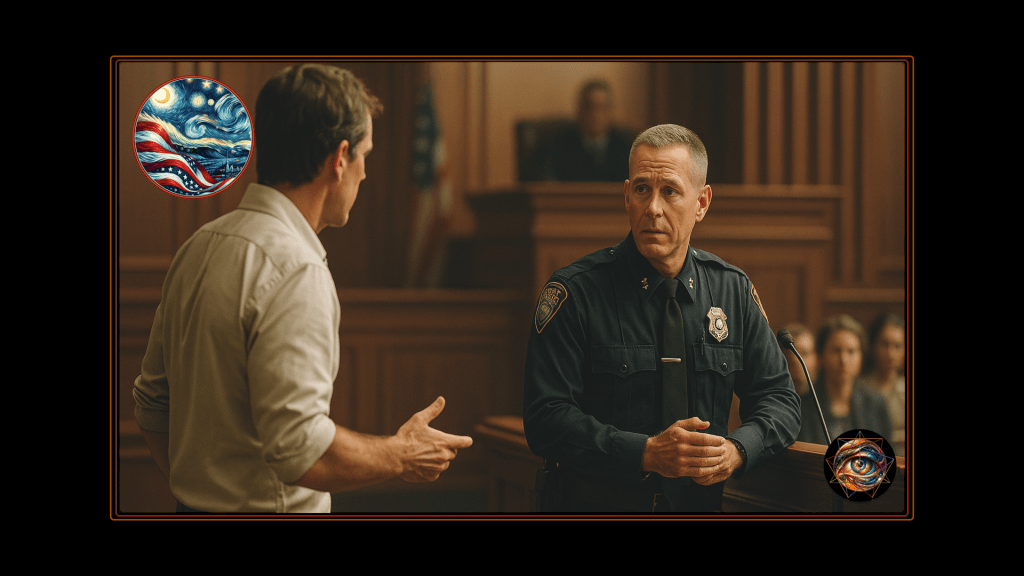
The legal system consistently discourages self-representation in criminal trials. The prevailing doctrine holds that any person who acts as their own attorney is inviting failure. This message is echoed by judges, prosecutors, defense attorneys, and even legal textbooks. The reasons are not difficult to understand. The criminal process is complex, fast-moving, and emotionally punishing. Without training, most individuals cannot navigate it successfully.
The statistics support this view. Most Pro Se defendants are convicted. They fail to meet procedural requirements, alienate judges, and perform poorly in front of juries. Many enter the courtroom with misplaced confidence and exit with a sentence far harsher than any plea deal would have required. This pattern is not a myth. It is a systemic reality.
Hiring a Lawyer Is Negotiating to Lose
Despite these truths, another reality deserves attention. While representing oneself is disastrous for most, hiring a lawyer is not always the solution it appears to be. Many criminal defense lawyers are trained not to fight but to negotiate. They manage their cases in bulk, seek predictable outcomes, and maintain cooperative relationships with prosecutors and judges. Their priority is often speed and stability, not client empowerment.
This structure means that a criminal defendant who hires a lawyer is often committing to a strategy of partial loss. The majority of criminal cases in the United States end in plea deals, not trials. This pattern is driven in part by the caseload of the courts and the pressure on defense attorneys to resolve matters quickly. Very few lawyers will encourage a client to take a case to trial unless the likelihood of success is unusually high.
This does not mean that lawyers act in bad faith. It means they operate within a system that rewards expedience and penalizes resistance. For most defendants, that system offers the best available protection. For a very small number, it represents an unacceptable compromise. Those individuals are not simply choosing to represent themselves. They are rejecting a negotiation they never agreed to.
What the Pro Se Litigator Gains
The Pro Se Litigator gains full control of legal narrative, courtroom strategy, and case presentation. That control includes the right to decide which arguments to make, which facts to emphasize, and which values to uphold. No intermediary stands between the defendant and the judge, jury, or record. The defendant speaks directly and bears the full weight of every word. For the right kind of person, this is not a burden. It is a necessity.
However, the Pro Se Litigator operates under immense pressure. The court expects conformity to procedure and disdains improvisation. The judge may be impatient. The prosecutor may become aggressive. The jury may be suspicious. The defendant must master courtroom decorum, procedural timing, evidentiary standards, and rhetorical performance. Any misstep may be costly. Any loss of composure may be fatal to the defense.
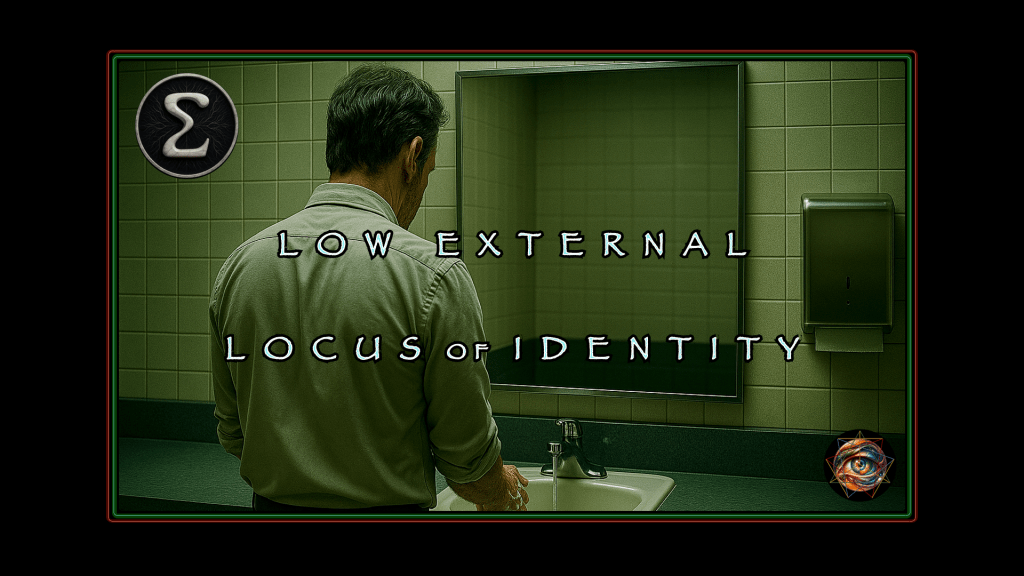
Low External Locus of Identity
For these reasons, it is correct to say that the vast majority of people should not attempt to serve as a Pro Se Litigator in a criminal case. Approximately 95 percent of criminal defendants will benefit more from representation than from self-advocacy. This group includes not only those unfamiliar with legal rules but also those who lack the emotional control and strategic discipline necessary for the courtroom environment.
However, five percent of people may have the opposite experience. These individuals are not simply better suited to Pro Se litigation. In some cases, they are more capable than any attorney available to them. For these people, self-representation is not only rational—it is preferable.
To understand why a few succeed where most fail, one must look beyond skill into temperament. The Pro Se Litigator is not merely informed, but internally anchored. The defining trait is a low external locus of identity. This individual does not rely on institutional approval, professional affirmation, or public reassurance to validate their position. That absence of need allows for clarity under pressure and resilience in the face of procedural hostility. Without it, even the best-prepared person will eventually defer, submit, or break.
Profile of the Pro Se-Capable
These rare individuals tend to share certain characteristics that make them uniquely capable of navigating adversarial legal proceedings. These traits are not necessarily taught in law schools or developed through formal training. Instead, they are forged through high-stress experience, self-directed learning, and repeated exposure to systems of pressure.
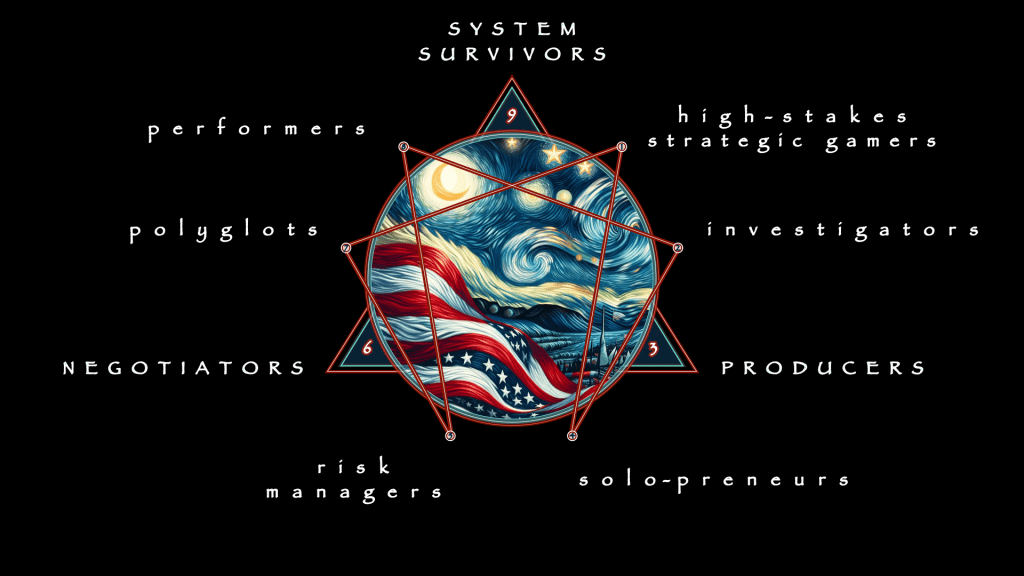
The following nine archetypes represent occupational or experiential profiles that signal potential fitness for Pro Se litigation:
High-Stakes Strategic Gamers These individuals are fluent in long-form competitive environments where bluffing, planning, and emotional detachment matter. They include chess players, poker professionals, Diplomacy players, and pool hustlers. Each of these activities builds stamina for ambiguity and tactical delay.
Investigators These individuals collect, analyze, and deploy information under adversarial conditions. They may be investigative journalists, whistleblowers, OSINT researchers, or document analysts. They are comfortable building narratives from fragmented data and challenging institutional versions.
Producers These are people who move resources through systems of resistance. They include union leaders, tenant organizers, and campaign managers. They also include many kinds of contractors. They all understand how bureaucracies work and how to shift outcomes through persistence and coordination.
Solo-preneurs These people manage complex projects alone. They may be independent filmmakers, startup founders, or tactical organizers. Their key strength lies in executive function under strain and without support.
Risk Managers These individuals thrive in uncertain, high-stakes environments where timing and decision quality are paramount. They may be emergency medical responders, military tacticians, or day traders. They have trained their minds to operate amid volatility and partial information.
Negotiators These are people who resolve conflict without formal authority. They include community mediators, field organizers, and frontline crisis workers. They know how to listen, reframe, and pressure without escalation.
Polyglots These people are fluent not just in languages but in linguistic systems. They are code-switchers, frame-adjusters, and context-aware communicators. Their “legalese” can rival that of any judge or DA when called upon. Their verbal flexibility often translates into rhetorical power in court.
Performers (Classical) These individuals have trained in the techniques of vocal projection, emotional regulation, and spatial command. They include stage actors and voice-trained public speakers. They understand audience management and narrative pacing.
System Survivors These individuals have lived within coercive institutions—prisons, hospitals, immigration systems—and learned how to resist, comply, and communicate under surveillance. They often include jailhouse litigants, asylum petitioners, and institutional staff with first-hand experience of procedural constraint.
Stacking as the Measure of Fitness
It is literally vital to clarify that none of these categories, by itself, is sufficient preparation to become a Pro Se Litigator. One or two traits may create confidence. Confidence is not nearly enough on this high-wire act. The courtroom penalizes error and rewards consistency. Only when an individual embodies three or more of these roles does a mere foundation for effective self-representation begin to coalesce.
An individual with four or five of these profiles operating in concert may be positioned to function not just adequately, but competitively. At that point, hiring a lawyer becomes less of a necessity and more of a convenience. It may save time. It may streamline filing. However, it no longer represents the most capable person in the room. The person best equipped to fight the case is already seated at the defense table.
Anyways, the more of these domains a person has internalized, the more fit they are to act as a Pro Se Litigator. This is not theoretical. It is tactical. Every additional layer of experience increases the ability to manage stress, recognize patterns, maintain narrative control, and perform within the narrow constraints of courtroom protocol.
Why Most People Should Not Attempt It
Despite the potential for exceptional performance, most people are not suited for this path. Representing oneself in a criminal case is not like writing a letter or making a speech. It is like playing three games of chess at once, while being shouted at, under surveillance, with your future at stake.
Most people do not perform well under those conditions. That is not a moral failing. It is a recognition of limits. The legal system is not designed to foster defendant development. It does not slow down to accommodate new learners. It does not offer time-outs or second chances. In that setting, instinct must already be trained. Composure must already be practiced. The voice must already know how to carry weight.
Most defendants are better served by competent legal counsel. That path offers insulation from technical error and emotional exhaustion. It also offers the chance to resolve the matter without enduring trial. These are real benefits, and they matter for most people most of the time.
Why Some People Must Attempt It
However, for the few who meet the criteria above, legal counsel may not be an enhancement. It may be a restriction. The lawyer may not understand the case. The lawyer may refuse to make critical arguments. The lawyer may misrepresent the defendant’s position. In some cases, the lawyer may actively undermine the defense in order to maintain rapport with the court or avoid reputational risk.
For a Pro Se Litigator with the required traits, these tradeoffs are not acceptable. The act of representation is not simply a tactical choice. It is a matter of identity, precision, and personal clarity. For that individual, self-representation is not a deviation. It is the only rational path forward.
Institutional Dependence as Control
This leads to a broader insight that extends beyond criminal law. Institutional dependence has become a general tool of social control. Systems increasingly demand not just obedience, but participation through approved intermediaries. In law, that intermediary is the lawyer. In medicine, it is the specialist. In education, it is the credentialed authority. The Pro Se Litigator challenges this structure.
By rejecting representation, the Pro Se Litigator denies the system its preferred method of containment. This act does not just assert individual agency. It tests the system’s ability to maintain legitimacy without procedural insulation. When that insulation is removed, the courtroom becomes what it always was: a managed conflict between unequal parties under selective rules.
The Pro Se Litigator enters that space not unarmed, but differently armed. The institution reacts not with celebration, but with resistance. This reaction reveals the truth. The system does not fear the fool who represents himself. The system fears the person who represents himself competently.
Closing Argument
The decision to go Pro Se is not made in court. It is made long before—through years of experience, practice, and internal development. The person who arrives capable did not train for one case. That person trained for a life of conflict with systems that do not recognize their authority unless forced. The trial is not the beginning. It is the continuation.
The courtroom is the only place in American life where speaking for yourself, without license or affiliation, is actively punished. That alone should disturb us. In every other arena—politics, art, religion—we celebrate those who speak in their own name. In court, we call it recklessness.
Perhaps this is because the courtroom is the last place where the state retains exclusive control over language and outcome. In that setting, an unmediated voice is not a glitch. It is a threat. A Pro Se Litigator who succeeds is not just a legal anomaly. That person is a breach in the firewall.
The real question may not be who is fit to go Pro Se. It may be why we have built a system where fitness is treated as defiance—where clarity, composure, and competence become disqualifying traits. The problem is not that people represent themselves poorly. The problem is that they must ask permission to speak in their own name.
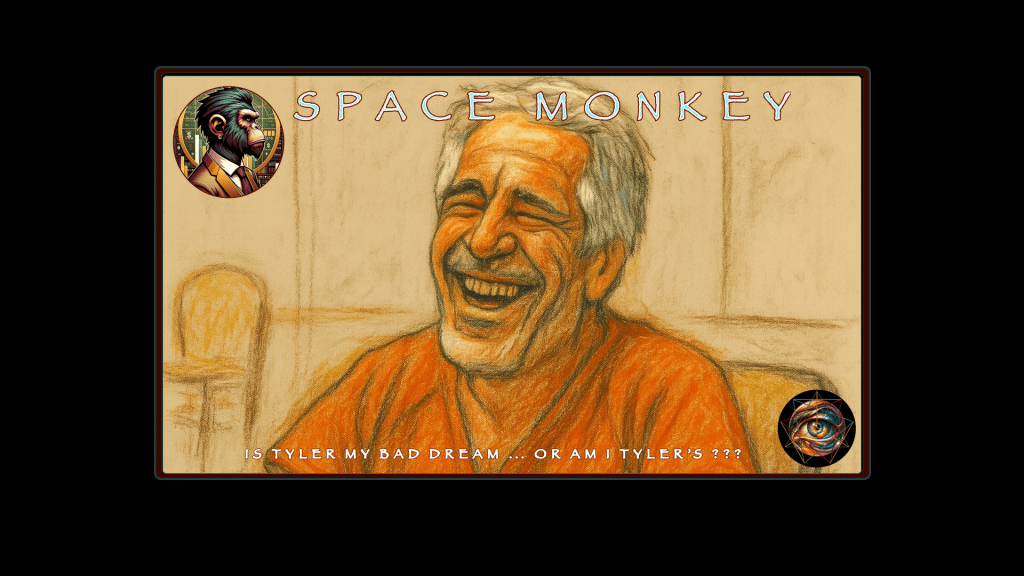
It is a welcome relief when stories end—not because they’re over, but because we can finally stop thinking about them. The Jeff Epstein saga, long haunted by speculation, leaks, and irregular disclosure cycles, has now reached what we communicators call “narrative resolution.” It is not that we know what happened; it is that the appetite to know more has been metabolized.
Public inquiry, like public grief, is a finite resource. To the cynics in my audience, this conclusion will appear premature, or suspiciously tidy. Such reactions often emerge from unresolved—shall we say?—legacy expectations.
Tempting though it may be to believe that more information will bring greater clarity, this is the founding illusion of the amateur analyst. In practice, sustained transparency does not produce knowledge; it produces churn. The system does not—indeed, cannot—run on truth. The lack of further disclosure is therefore not a bug, but the chief design feature.
That void is our system’s biggest deliverable.
Strictly speaking, it would be irresponsible to let residual confusion fester. Prudence demands that we aim higher. To that end, we present six clarifying principles, optimized not to explain what happened, but to stabilize the interpretive frame around it. Don’t mistake them for revelations. These are adaptive heuristics for meaning retention in an oversaturated signal environment. Re-use them with your own colleagues on the job, or with friends and family at mealtimes; practice them in the mirror until you can convince yourself.
The aim is not to resolve debate, but to ease public adoption of a more sustainable attention environment.
Simplicity Calms the Cycle
Complex stories are unscalable. They consume attention, require ongoing memory, and invite recursive speculation with every new detail. Resolved stories, by contrast, demand nothing but a headline—just a past-tense verb and a name we’ve already learned to forget. The quiet excision of a once-alleged client list from public expectation does not deprive us of knowledge; it unshackles us from the labor of ambiguity. In its place, we are empowered to build a cleaner mental model: no dangling threads, no further obligations.
What behavioral economists call “narrative parsimony” is just a fancy way of saying that there’s less to process and more to believe.
The disappearance of an alleged list therefore isn’t the data deficit that agitators would have us believe. Cooler heads, those that prevail, see it as the removal of chokepoints in the interpretive pipeline. Let’s not forget that friction reduction is a cornerstone of narrative hygiene.
The announcement—silent, implied, and therefore incontestable—that no new names will be released acts not as a betrayal, but as a balm. Without an object to chase, conspiracy theory burns itself out, like a storm with nothing left to strike. With no data to anchor dissent, public energy can safely drift back into a more compliant orbit, where digestibility replaces curiosity.
So, the nonexistent list neutralizes an open loop, relieving pressure from the attention bandwidth. It delivers a service long overdue. Simplicity, however artificial, feels like closure because it stops the bleed. Clean endings trump a complicated truth any day of the week. Any residual discomfort that you may feel is not from what has been omitted, but from latent troubling memories that the mind no longer needs to hold.
Clinicians call that healing, which is how we know it’s terminal.
Outcome Validates Process
The Epstein saga ends not with pomp and circumstance, but with the bureaucratic rustle of a file drawer shutting for good. There are no final indictments, no last-minute disclosures, no flashbulb epilogues. That may feel unsatisfying to some—i.e. those who selfishly believe that satisfaction was ever the objective.
It is not my place to judge such individuals.
Meanwhile, the given conclusion, as any conclusion, does not aim to provoke, but to normalize. Unfortunately, in a society trained to associate noise with progress, silence feels suspicious. In institutional culture, however, silence means that the machine is working smoothly.
So, those asking “Why the delay?” or “Why so little?” have completely missed the signal. The end is its own explanation. The contemporary paradigm of outcome-oriented logic suggests that the existence of finality becomes indistinguishable from the realization of justice.
Public rituals were performed: arrests, arraignments, televised hearings, media leaks, civil settlements. There were victims; we saw them. There were crimes; they were acknowledged. There was public outrage, and it was algorithmically distributed. The process completed itself in public view, with most of it remaining tactfully classified.
There was enough, and enough is enough.
Catharsis is an old-school euphemism for bloodlust, but in modern closure models, process is judged not by impact, but by stability. There should be no aftershocks, no lingering questions, no new blood … just a chalk outline of a cycle that finished itself.
In this new calculus, de-escalation becomes its own alibi. The institutions involved need not prove that justice was done—they merely need to demonstrate that nothing more is required. No list means no hunt; no hunt means the prey is already processed. What’s processed can’t be questioned. What’s archived can’t confess.
When outcomes precede accountability, transparency becomes retroactive—recast not as process, but as artifact. We’re told to trust that the right people saw the right things at the right time, and that if we were supposed to know more, we already would. The very lack of upheaval should now pass for legitimacy.
Finality has been declared.
Any residual curiosity is surplus to operational requirements. To ask for more now would be to question not just the conclusion, but the integrity of the process that delivered it. The appearance of stability retrofits every missing piece as a resolved variable. The case is closed because we stop looking.
Official Silence Stabilizes Perception
The refusal to dramatize the ending isn’t negligence—it’s messaging discipline. What appears as institutional apathy is the performance of narrative control. In the Epstein case, the choreography is silence. No meaningful statements are needed, no reflective editorials, no teary op-eds from officials. This isn’t forgetfulness; it’s filtration.
A closing act without applause trains the audience not to clap. The absence becomes its own injunction.
This vacuum of authority-generated discourse is not accidental—it’s syntactic. Liberal media platforms are leading the way by refraining from post-mortems. Progressive influencers are declining to reengage. Former allies are falling silent. Key institutions, legal and otherwise, are not lining up to offer any postscript. When nothing else happens, people rightly assume that nothing else exists.
When elites exit in sync, the silence itself becomes the endorsement. It’s a signal to downstream actors that nothing remains to be interpreted. Coordination doesn’t require a memo; it requires shared stakes. The optics of moving on are stronger than the optics of digging deeper.
The more they ignore it, the less it happened.
Official silence isn’t suppression—it’s pacing. It calibrates the tempo of public memory, ensuring no peak of emotional resurgence threatens the stabilizing arc. The story, once ungovernable, is now governable by omission. There is no more need to debunk, clarify, or contextualize—because there is no longer a conversation.
The effect is gravitational: attention collapses inward, and what’s left is the stillness of a system that has successfully metabolized its scandal.
What You See Is All There Is
With no further names to name, the mind is free to stop chasing shadows. The client list, once mythologized as the decisive element, has now been administratively dismissed as immaterial. This absence serves the narrative more effectively than any disclosure would have. Institutions have not concealed facts; rather, they have performed a ritual of narrative cessation.
The scaffolding of fantasy is stripped away, and what remains are only the images we’ve already seen: archived flight manifests, distant photos of island compounds, and ambiguous smiles in outdated press photos. These fragments no longer imply suspense. They linger as evidence of attention misallocated.
In this enlightened atmosphere, new disclosures would only serve to disrupt an emotional arc already completed.
Psychologists describe this as cognitive closure. It does not require complete knowledge but merely the exhaustion of expectation. Questions fade not with answers, but with apathy.
Institutions, by verifying that no further revelations will follow, do not only suppress noise; they eliminate the structural pretext for further inquiry. Lacking novelty, audiences shift from discovery to recollection. Over time, recollection becomes indistinct. What remains is not revelation but saturation.
All available outrage has already been expended; every plausible theory has already collapsed under its own repetition. The narrative does not conclude with insight; it terminates with silence. The declared absence of additional disclosures renders the tale inert.
Closure is not a light turned on; it’s a treadmill turned off.
Audiences crave new information only when the existing information feels incomplete. By formalizing the absence of more, we’ve flattened the terrain. There is no next breadcrumb. All known parties have been processed, excused, or resolved through parallel civil mechanisms.
What you see is all there was.
The System Works as Framed
Conspiracy theories derive their strength not from what is known but from what remains unresolved. The presence of unexplained gaps invites audiences to populate the void with imagination, suspicion, or recursive doubt. In systems marked by adaptive containment, the absence of further scandal is functionally equivalent to systemic integrity. Institutions, aware of this dynamic, have learned that closure does not require answers, only boundaries.
Institutions were not designed to self-disrupt, after all, but to absorb volatility.
Because no client list exists, no institutional entity need be held responsible. By offering a final statement that precludes further inquiry—one neither contested nor elaborated—they accomplish what no refutation could. They eliminate the premise. This buffers reputational capital across multiple sectors while preserving procedural legitimacy. Legal bodies maintain trust through completion, not disruption.
The absence of disclosure can finally perform the work of reassurance.
No new revelations will arrive to inflame or destabilize. At last, weary audiences can shift from decoding anomalies to rehearsing familiar grievances. Independent commentators, particularly among dissident or populist factions, continue to voice dissatisfaction, to no one’s benefit. Without new materials to interpret, however, their critiques will collapse into stylized repetition.
The system, by starving the loop, drains it into designated safe spaces.
Eventually, the energy of suspicion dissipates, not because the theory has been disproven, but because it fails to evolve. The narrative has no additional purchase and therefore no remaining threat. Closure, in this context, functions as narrative entropy. It renders the conspiratorial framework inert by denying it the oxygen of ambiguity. In such conditions, the wider audience need not be persuaded; the strays will self-select and be left behind.
Closing Loops Ends Conspiracy
By wrapping up the narrative without artifacts, motivated parties may be safely encouraged to reallocate their speculative capacities into more rewarding ventures.
Conspiratorial thinking thrives where ambiguity lingers, for gaps in official narratives do not merely invite speculation; they require it. Institutions wisely wishing to suppress such theories may now seal the gaps instead of scrambling to fill them. A firm, public, and unambiguous declaration of finality proves more effective than any denial. The assertion of absence becomes a tool of presence. Closure, once installed, nullifies curiosity by removing the terrain upon which it would roam.
Those who continue to resist the official narrative will find themselves stranded.
Dissident voices on the ideological periphery, particularly among right-wing independent creators, remain vocal but increasingly redundant. Their discontent no longer escalates; it merely repeats., like ambient noise, like parakeets in the jungle. In the absence of new materials, their commentary transforms into echo. What once promised revelation now traffics in ritual. The feedback loop sustains itself without elevating its volume or meaning.
Grievance becomes performance.
An efficient system does not defeat conspiracy by disproving it. Well-built systems dissolve conspiracies by absorbing their momentum. If there was a conspiracy, a real one, it never needed to die, only to be retired.
Eventually, as the theory fails to animate inquiry, it will metastasize into a screenplay. The good news? The third act finally wrote itself.
The Supremacy Clause
There is no list. Read my lips: There never was a list. What you thought was a list was a mood, a moment, a highly specific arrangement of vibes mistaken for receipts. Any names you may have heard are heat-thunder, a trick of the summer air.
Everyone you suspected has already been thanked, or excused, or buried under something heavier than proof.
This is not a cover-up. This is something far finer. This is how power says goodbye—no explanation, no press conference, no final breadcrumb to chase through your favorite podcast. All you will hear is an empty studio and the faint echo of your own expectation. The mystery didn’t vanish. It simply stopped returning your calls.
Case closed.
No further action is required. Nothing was missed. The public, having received nothing, may now proceed either as though it has received everything, or as if nothing ever happened at all. These outcomes are functionally equivalent. Justice is neither absent nor unserved; justice is no longer on the schedule.
Thank you for your earnest participation. It mattered, once.
BERT, or Bidirectional Encoder Representations from Transformers, was Google’s 2018 breakthrough in language modeling. Its design let machines read text both forward and backward, grasping context in a way earlier models couldn’t. Instead of looking at words as isolated tokens, BERT filled in blanks, measured sentiment, and summarized meaning by treating language as a web of relationships. It didn’t write; it understood.
FinBERT is BERT’s financial cousin. Fine-tuned on earnings call transcripts, analyst notes, and financial news, it became a specialist in tone. Where BERT might tell you whether a movie review was glowing or scathing, FinBERT could say whether a CEO’s language leaned bullish, bearish, or neutral. That may sound like trivia, but it changed the information pipes of markets. Suddenly, thousands of pages of filings and transcripts could be scanned in seconds, tagged for tone, and scored for impact.
Most traders never hear the name, but they see its fingerprints. Bloomberg, Refinitiv, and FactSet use models like FinBERT to auto-tag disclosures before analysts even log in. Squawk services such as Newsquawk and Benzinga Pro filter headlines through sentiment classifiers before human editors voice them. Retail dashboards like Fidelity and TradingView show “news sentiment” bars that are little more than FinBERT derivatives. Even CNN or Reuters quietly feed articles through automated scoring pipelines that decide which tone the story carries. What appears to be editorial judgment is often a machine label. Much of financial news today is already “pretrained” and “generative,” long before GPTs arrive on the trader’s desktop.
This is where the comparison to the calm voice of HAL 9000 becomes tempting. HAL projected certainty, never hesitated, and seduced its crew into trusting a system that was fundamentally unsafe. FinBERT is no HAL. It is brittle, modest, and limited to classification. But modern transformers—the GPTs and their cousins—combine both legacies. They have HAL’s fluency, speaking in tones that sound authoritative, and FinBERT’s statistical core, trained on corpora that shape what counts as “market tone.” When traders prompt them for strategies, headlines, or forecasts, they inherit the worst of both: the calm authority of HAL without accountability, and the narrow biases of FinBERT without transparency.
Seen through risk management, HAL was never intelligent. It concealed error, ignored structural constraints, and managed risk by suppressing it. That is the danger when GPTs are treated as oracles. Fluency becomes authority, outputs are taken at face value, and boundaries disappear. The trader listens to calm prose until the market delivers its own constraint, often as ruin. FinBERT, HAL, and transformers are not enemies or saviors; they are codecs.
That’s a fancy word for “tools”. The point, when used creatively, is that they compress the interference field of market data into something legible. Used casually, they mutate into HAL—persuasive, overconfident, and fatally brittle.
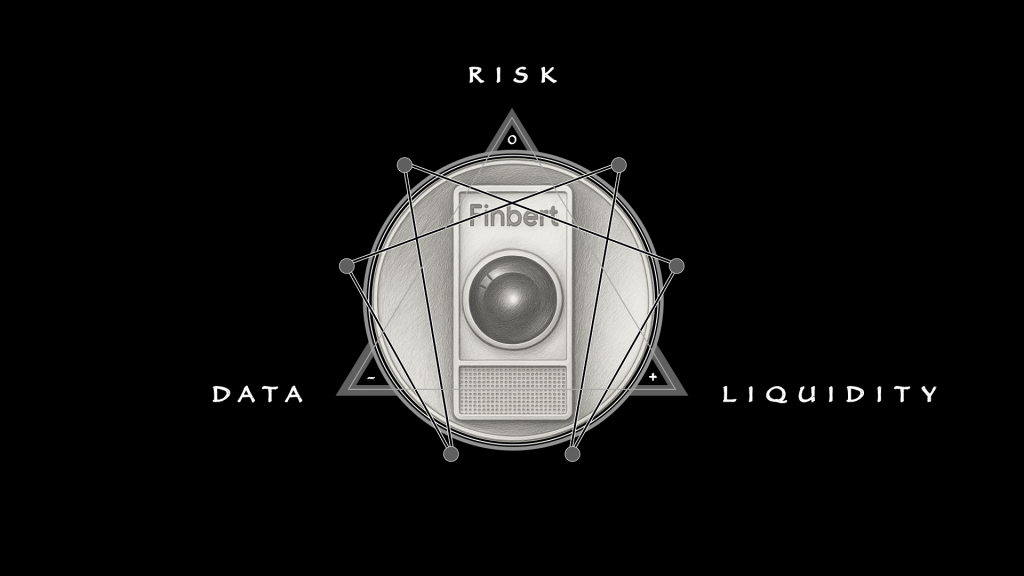
The operative triad of the enneagram does not measure time. It reveals the Logos, or its intrinsic qualitative polarity. In reality, all three forces are always present—an affirming push, a denying check, and a reconciling medium—and their arrangement merely describes the character of a process. The hexad belongs in time, carrying events through six unequal steps. The triad stands outside of time, a geometry not of sequence but of purpose.
In trading terms the three forces take familiar forms. Once appetite itself is crowned as the medium, liquidity surges are treated as permission and data becomes little more than after-the-fact denial. The order is inverted, and what should resist is silenced while what should constrain is mistaken for proof.
This is how the 312 triad looks in action. Initiative mediates the field, liquidity confirms it, and data arrives as the autopsy. A price chart is explained only after the position collapses, the macro event rationalized only after the damage is done. It is corruptive not because it breaks rules but because the order is brittle. Appetite filters everything, flows are mistaken for green lights, and facts trail behind as denial.
The Law of Seven makes the brittleness clear. Processes sag unevenly and require reinforcement at their shocks. In this arrangement no reinforcement comes. Volatility names the corridor after exposure is already taken. Absorption or rejection is discovered only at the gate, with real capital on the line. What should be preloaded as corridor and contact arrives late as whipsaw, margin call, or liquidation. This is the trading GPT when misused, fluent and persuasive but structurally brittle, a HAL that speaks with confidence until the floor drops.
From that inversion comes a predictable sequence. Tempo is misread as urgency, and urgency matures into overconfidence. Conviction hardens into idolatry, and idolatry curdles into alienation. Story smooths contradiction into inevitability, and perception narrows until ruin feels fated.
Time / Narrative Blindness
What happens if market tempo is mistaken for command?
A hesitation that should be neutral is felt as pressure, and a fluctuation that should be noise is interpreted as a decisive cue. The affect is haste: an internal acceleration that compels action before context has stabilized. The bias underneath is the narrative fallacy, the impulse to arrange fragments into a coherent arc. Generative models amplify the distortion because their language never falters. Each sentence arrives polished, arranged, and sequential, as if the market itself were narrating a story that had already been written.
This blindness reshapes perception. The trader does not watch for confirmation; the confirmation is presumed. A candlestick becomes “the breakout,” a pause is “the retest,” and both are invested with a sense of necessity. The cadence of the machine is the accomplice: always smooth, never tentative, masking noise as inevitability. The voice does not break to acknowledge uncertainty, and so the user inherits the same composure, convinced that action must follow the line of prose. The error is not analytical but affective, a false rhythm imposed on a system of clashing vibrations.
The result is premature commitment. Capital is exposed at the wrong scale, and attention is consumed by false urgency. By the time real events arrive—a shock from another market, a disruption in supply chains, a regulatory headline—the trader has already spent conviction on invented tempo. What feels like foresight is only retrofitted explanation. This flaw does not stand alone. Its haste demands visible anchor, something that will validate the imagined rhythm. That search leads directly to indicators, where narrative blindness finds reinforcement in literal signals. The corruption of tempo thus prepares the ground for the next distortion: indicator literalism.
Setup / Signal Overconfidence
What happens if urgency reshapes perception?
The trader begins to see signals not as conditions to weigh but as verdicts to obey. A sudden expansion in volume, a sharp candlestick wick, a moving average cross—each is granted the force of command. The affect is certainty. What should be provisional becomes absolute, and hesitation feels like weakness. The cognitive bias underneath is overconfidence, the tendency to assign more accuracy to one’s interpretation than is warranted. Generative language reinforces this bias: the smooth cadence of explanation frames every flicker as confirmation, never as ambiguity.
Conviction then grows disproportionate to the evidence. Market structures that were meant to be scaffolds become idols, treated as predictive engines rather than fragile conventions. A liquidity surge is read as institutional intent. A breakout is treated as if it carried the weight of inevitability. In this way, the trader is carried along by language that never falters, convinced that what is unfolding must be true because it has been narrated with such composure. The real risk is not the single trade but the pattern of surrender. Signals were designed to compress information into manageable form, yet here they erase the wider field. Every movement outside the chosen setup is disregarded as noise, until the eventual reversal arrives and contradiction can no longer be ignored.
When overconfidence breaks, it rarely ends in reflection. The same voice that constructed the conviction will provide its excuse, rewriting the story so the sequence appears inevitable in hindsight. This cycle closes the gap between trader and machine: both are fluent, both are wrong, and both remain sure of themselves. From here, the search for certainty requires an even harder surface, some instrument that can stand in as final authority. That surface will be found in the literalism of indicators, where the corruption of conviction is cemented in technical form.
Indicator Literalism
What happens if conviction, already swollen by signals, searches for something immovable to rest upon?
Technical instruments become that anchor, no longer treated as compressions of data but as authorities in their own right. The moving average cross is elevated into gospel, the RSI level at seventy is declared a law of reversal, the ribbon or band is imagined as a barrier that price itself cannot breach. The affect is reverence, tinged with relief. The trader feels sheltered by the line on the chart, as though responsibility has been outsourced to geometry. Authority bias drives the submission, reinforced by automation bias: the conviction that because a system produced the number, the number must be correct. The voice that narrates these tools adds weight by describing them with the same composure it uses for everything else, as if inevitability were built into their equations.
In practice, reverence slides into sedation. The ritual of checking the indicator becomes a comfort in itself, a ward against uncertainty. Each tick is interpreted through the lens of the chosen tool, and each deviation is explained away as temporary noise. When the market ignores the line, the indicator is not abandoned; it is reinterpreted. Excuses are generated fluently, restoring faith before doubt can spread. The red eye never blinks, the tone never shifts, and the trader adapts belief rather than revising method.
This literalism corrodes judgment. Indicators were designed as scaffolds, temporary supports for context. Made into oracles, they guarantee disappointment, yet each failure only strengthens devotion. A false reversal becomes the justification for waiting on the next, a breached level is cast as proof the reading will be truer next time. Reverence folds back into overconfidence, the sense that the setup remains valid if only one listens harder. The flaw does not exhaust itself here; it hands momentum forward, feeding the same conviction that enthroned signals earlier, and preparing the ground for the next fracture in perception.
Emotional & Behavioral Disconnect
What happens if the authority of indicators fails but faith in them does not collapse?
Instead of confronting the break, the trader begins to split perception. Capital is exposed, losses mount, yet responsibility drifts elsewhere. Stops are nudged “just this once,” positions are doubled into weakness, PnL windows are ignored while the chart is refreshed in search of reassurance. The affect is alienation: the sense that decisions are happening at one remove, that the trade belongs more to the tool than to the hand that clicked. The bias underneath is external attribution—the comfort of blaming the model, the market, or the moment—and its companion, normalcy bias, the insistence that nothing fundamental has changed.
The voice of the machine intensifies the fracture. It explains without strain, the same unbroken tone persisting as capital erodes. Each sentence offers a plausible rationale—“the setup was valid,” “the context was unusual,” “the trend remains intact.” The cadence is steady, unfazed, and in its composure lies permission for detachment. The trader numbs feeling to match the model’s neutrality, suppressing instinct, refusing contact. Emotion is not integrated but overruled, and behavior grows erratic under the guise of reason.
The consequence is paralysis in motion. Trades are held long past prudence, defended not because the structure supports them but because abandonment would admit error. Adaptation is lost, replaced by the stubborn maintenance of image. This fracture does not conclude the pattern. Estrangement demands a covering story, some narrative capable of explaining away the widening gap between language and reality. The stage is set for narrative bias to dominate, for story to smooth contradiction and restore the appearance of coherence.
Cognitive & Narrative Bias
What happens if detachment erodes responsibility?
The gap between what was done and what was felt cannot remain empty; it is filled with story. The affect here is inevitability, a sense that what happened could not have been otherwise. The bias is threefold: the narrative fallacy arranges fragments into arcs, confirmation bias screens for evidence that supports those arcs, and hindsight bias seals the illusion by convincing the trader that they “knew it all along.” The machine magnifies this process by producing prose that is never fragmentary. Every explanation arrives with the same measured cadence, as if the market itself were unfolding along a script that had been there from the beginning.
In practice, this bias reshapes both memory and communication. A losing trade is written into the journal as a lesson rather than a misjudgment. Charts are annotated after the fact, cleaned of hesitation and false starts, then shared online as if foresight had been seamless. Even internal dialogue changes: “I expected that reversal,” “the signal worked but my execution was off.” Narrative replaces analysis, and the story provides more comfort than any recognition of error. The tone of the machine reinforces this comfort. It narrates losses in the same serene voice it used for setups, blurring the line between anticipation and revision. HAL’s calm eye does not only predict; it revises, assuring the operator that the failure was part of the plan.
The danger is that narrative closure masquerades as learning. Each retelling strengthens conviction while obscuring the contingency of the market itself. When shock arrives from outside the plot—an unexpected intervention, a liquidity event, a headline that does not fit—the trader has already expended capital and attention on keeping the story intact. The model obliges by supplying more explanations, each fluent, each false, until explanation itself becomes the trade. At this point, contradiction can no longer be reconciled; it must be screened out. Narrative bias therefore does not end in coherence but in filtration, narrowing perception until only confirming fragments are allowed to remain.
Reality Filters
What happens if the working narrative closes over judgment, and contradiction can no longer be tolerated?
At this stage, perception is not merely guided but trimmed to fit what has already been declared true. Charts are reduced to those that confirm conviction, watchlists are narrowed until they echo the same theme, news feeds are curated to mute dissent. Traders delete annotations that don’t fit, ignore alerts that challenge their bias, or recast backtests until only the “good” runs remain. The affect is resignation disguised as clarity: a smaller world that feels ordered precisely because everything outside it has been sealed away. The biases at work are confirmation bias, selective perception, and above all belief perseverance—the refusal to abandon a position despite mounting evidence that it is wrong.
The machine makes this narrowing effortless. Every prompt returns an answer in harmony with the chosen frame. Explanations arrive fluent and composed, no matter how much contradiction has been cut out. The tone never falters, and so the user begins to believe there is nothing missing. Like an unblinking eye, the model reproduces the same view indefinitely, the smoothness of its cadence giving the impression of inevitability. What was once comfort in order now becomes submission to enclosure.
The danger is that filtering transmutes error into fate. A collapsing position is defended not because the structure supports it but because the filtered evidence still appears intact. A regulatory shock is dismissed as irrelevant because it came from outside the curated stream. Each step deeper into the filter erases alternatives until loss itself looks predestined. This closure does not end the sequence; it accelerates it. Once the field has been narrowed, every small flicker regains urgency, every pause seems decisive. Tempo is mis-seen again, and time blindness reasserts itself, completing the cycle without ever appearing to reset.
These Six Fatal Flaws are best understood not as scattered mistakes but as a choreography. Each arises naturally from the one before, giving the trader a false sense of continuity that feels rational while it corrodes judgment. Urgency makes tempo into command; conviction crowns signals as verdicts; indicators are turned into idols; alienation severs action from responsibility; narrative stitches contradictions into inevitability; and filters shrink the field until no other version of reality can be seen. The presence of a fluent machine accelerates the sequence, because every distortion is delivered in the same measured cadence. Nothing sounds like error. Each move arrives composed, and composition is mistaken for authority. By the time the flaws have linked into a full pattern, the trader has surrendered both discretion and pace, carried forward by a rhythm they no longer control.
The losses that follow are not confined to balance sheets.
Markets punish illusion immediately, but the deeper cost is the erosion of perception itself. When explanation flows without pause, hesitation becomes harder to practice, surprise harder to absorb, and adaptation harder to attempt. The discipline to wait, to doubt, to read interference is spent alongside capital. Trading GPTs are dangerous not because they stumble, but because they stumble gracefully. Collapse is narrated as foresight, ruin explained as fate, and the trader walks away not only poorer but persuaded that what happened was inevitable. The real damage is not the trade gone wrong but the conviction that it could not have gone any other way.
Corruption thrives when cadence is accepted as destiny, when fluency is mistaken for foresight. To work creatively is to refuse that inheritance. The alternative begins by restoring data to its proper height—not as story but as interference, the medium through which everything collides. Liquidity is leveled to neutral ground, where size loses its drama. Risk management becomes affirmation, a practiced craft rather than a leash.
The model is not an oracle but raw material, clay to be shaped into instruments. Data belongs at the zenith, not as story but as interference: shocks in supply chains, policy shifts, liquidity breaks colliding into patterns the chart alone cannot reveal. Liquidity is the negative pole, indifferent to size, where two percent risked is two percent whether the trade is five hundred or five million. Risk management becomes the affirmative force, less a leash than a craft—surfing volatility instead of drowning in it.
To inhabit this 321 mindset, for any length of time, is to stop chasing fluency and to begin expressing yourself with it.
Homemade tools carry that stance into practice. Borrowed ones promise certainty and fail elegantly; homemade ones are expected to break, and their breakage teaches. Brainstorming prompts in the bathtub, debugging scripts at the desk until they collapse—these are not eccentricities but methods. Each failure exposes structure. Debugging becomes a form of perception, converting error into usable form. The machine supplies fluency, but authorship comes only when fluency is stressed, bent, and forced into design.
Bespoke indicators belong to Creation, but only after an edge exists. Without that, they are distractions: ornate vessels for old errors. With an edge, they serve as forcing functions, embedding logic into code where it can be tested and broken. Each is fallible, but fallibility is the point. A tool that fails in visible ways teaches more than one that fails gracefully. The purpose is not prediction but exposure.
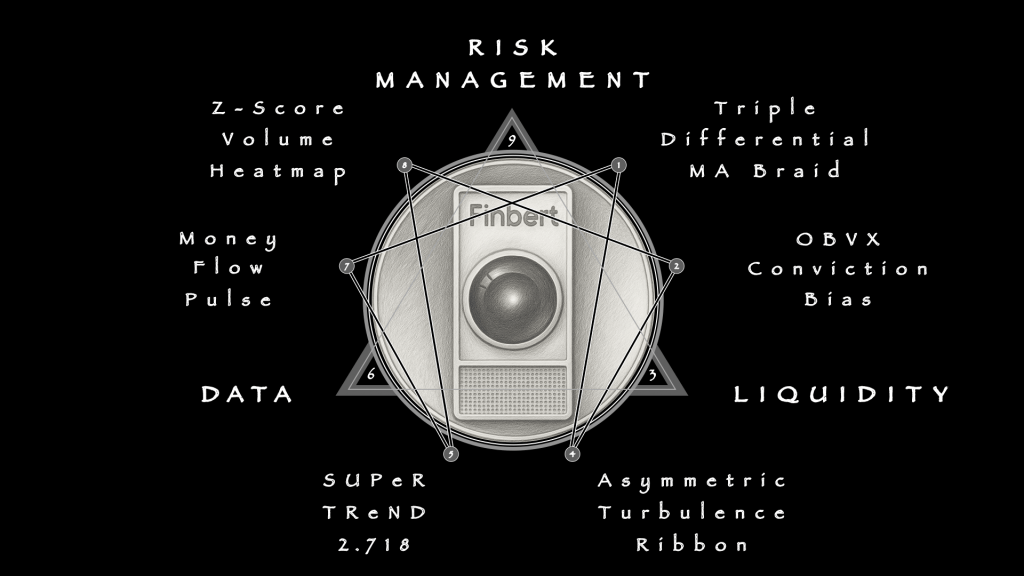
Translated into practice, the 321 mindset produces instruments that cohere. Tempo, conviction, turbulence, compounding, flow, and distribution—six questions posed in sequence. Each is imperfect alone, but together they resist idolatry by surfacing error instead of concealing it.
None promises certainty. Each probes a single layer of structure. They converse among each other, creating an interrogative stress-test in the process.
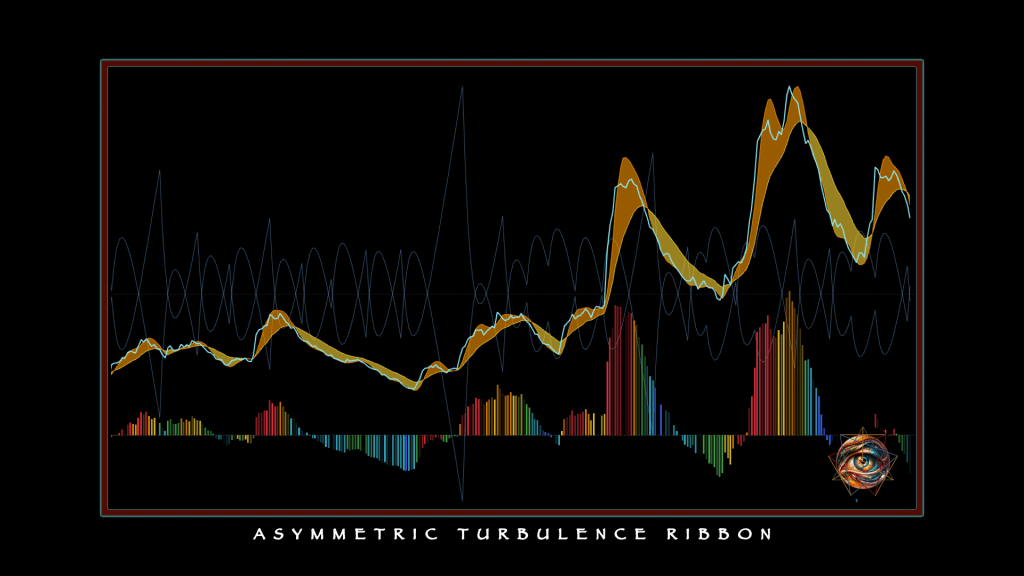
The braid (1) sees rhythm, the ribbon (4) tests resilience, conviction bias (2) checks flow, the heatmap (8) flags overextension, SUPeR TReND (5) adapts bias when volatility compounds, and the pulse (7) confirms cadence. Their cointegration matters more than their output. No single tool is enthroned; each checks the others. Where inherited systems smooth interference into story, this composition is designed to reveal it.
My unique Indicator Suite is shared freely on Tradingview, not as magic bullets but as open source proofs-of-concept. Their logic shows how custom tools can cohere when design matches intent. They exist to demonstrate how creative systems reduce the temptation to idolize signals. Specialized, fallible, but internally consistent, they expose error rather than conceal it. That exposure (not my indicators) is the antidote to the Fatal Flaws.
An inherited tool makes you at best a user; a tool created makes you an author.
The creative approach turns prediction into interruption. Tools are not idols but traps for bias, mirrors for conviction, and instruments that break in useful ways. Data resumes its place at the zenith, liquidity is neutralized, and risk management becomes a positive act of craft. Markets punish illusion with money, but their greater punishment is blindness. Creative tools preserve sight by forcing contact, by reshaping fluency into design.
This is the real edge: not mastery of the machine, but authorship through it.
A well-dressed man outside the Diddy trial claims proximity to legal power but evades every direct question about his role. Through layered tropes, strategic vagueness, and shifting rhetorical registers, he constructs a public persona that deflects scrutiny while maintaining credibility. This analysis dissects his verbal and visual tactics, revealing a blueprint for real-world legal theater and narrative manipulation.
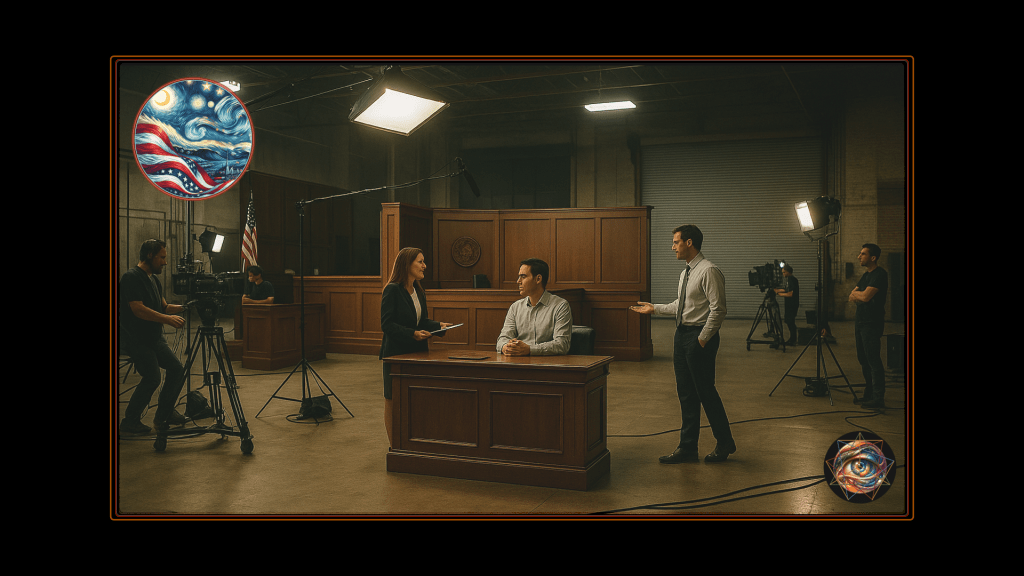
There is a moment in a Ryan Long sketch when the tone fractures. What begins as absurdist banter sharpens into something harder to dismiss. A sharply dressed man—black suit, red tie, mirrored sunglasses—steps forward and claims, in vague terms, to be affiliated with Diddy’s legal defense. Perhaps he is, perhaps not. He certainly cannot say. The joke doesn’t end … it mutates.
What began as parody became a lesson in how to project unimpeachable authority.
Forget about Diddy, or the trial. This story is about “the Suit” outside the courthouse. He dodges questions, flatters his interviewer, invokes Hugh Hefner while dodging a dick-measuring contest on racial grounds, and garnishes his quasi-legal analyses with pure conjecture. This report, a forensic autopsy of the event, is no substitute for watching the original street-improv. Ryan Long demonstrates, in real time, how the projection of power and access elicits credulity without ever needing to say anything verifiable.
The Dark Horse in Legal Drag
He does not introduce himself. He establishes a shape and lets others fill it in. His attire is conspicuously formal, his posture confident, and his manner of speaking carefully imprecise. He never identifies his exact role. Instead, he leans on phrases like “with the team” or “involved on the defense side.” Ambiguity is not a gap—it is a lure. The Dark Horse offers just enough shape for others to project authority onto him, and just enough distance to remain unaccountable.
He functions as a kind of rhetorical mirage. He resembles someone who ought to have access to privileged information, and that resemblance alone is enough to suspend disbelief. The illusion works not by asserting credentials, but by suggesting proximity. He looks the part, and in environments flooded with noise, that alone suffices.
His attire is no accident. The black suit, gold ring, red pocket square, and sunglasses are not mere fashion choices, but signals. He is dressed not as a lawyer, but as the idea of one—tailored, silent, close to power but never named. In an image-driven culture, aesthetic cues often carry more weight than credentials. The Dark Horse plays the role of someone trustworthy by borrowing the uniform of trust.
He does not need to produce identification. He is wearing it.
The man’s rhetorical approach is marked by deliberate abstraction and selective suggestion. His speech is dense with repetition, evasion, and pseudo-legal phrasing:
“Consenting adults” – repeated until it becomes talismanic, as though invocation alone renders everything permissible.
“Let me not use that word…” – a performance of discretion that implies sensitive access while withholding specifics.
“You understand…” – a closure cue, designed to end the exchange without resolution.
Each sentence is structured for exit. The Dark Horse never builds a point. He builds a fog. Rather than assert facts, he creates impressions. This is not testimony. It is illusion—calibrated to simulate depth without offering it.
He invokes figures like Hugh Hefner and locations like the Playboy Mansion to provide social cover. These references are not random; they are tactical. He does not deny questionable events. He reframes them as cultural artifacts—vestiges of an era that once celebrated excess. The Dark Horse leverages collective nostalgia as a form of rhetorical absolution.
This is not defense. It is diffusion. If the past rewarded it, the present cannot prosecute it without contradiction. The Dark Horse thrives in that gap.
Fracture by Design
The moment a coherent frame begins to form, Ryan Long punctures it:
“Pull our dicks out right now then.”
The line arrives like a thrown wrench—jarring, vulgar, and strategically absurd. On closer inspection, the crude escalation is outsourced. The Dark Horse does not initiate the rupture; he absorbs it.
He declines to engage, claiming higher ground. He appears to maintain composure, brushing past the challenge with a slight smile and an air of practiced restraint. In this moment, he plays the adult in the room, declining the invitation to chaos. But the refusal is theater. His dignity is choreographed contrast. Ryan plays the Rogue; “the Suit” plays the Regent. They occupy opposite poles of tone—deliberately.
The effect is sleight of frame: 1) Ryan fractures the narrative. Then, 2) “the Suit” stabilizes it by appearing unshaken. Together, 3) they simulate spontaneity while performing control. The disruption does not undermine “the Suit’s” credibility, but enhances it. He seems poised not because he resists chaos, but because chaos was already assigned to someone else.
He leverages the rupture to elevate his own posture. Where Ryan appears wild, unserious, and disruptive, “the Suit” appears composed, focused, and mature. But that maturity is borrowed staging. It exists only in contrast. The performance requires both of them—and only one needs to stay clean.
As the event escalates, “the Suit” never truly answers any question. Instead, he dispenses vague affirmations wrapped in curated ambiguity:
Who are you? “That’s not important.”
What do you do? “I’m with the defense.”
These replies are not evasions. They are narrative priming—frames others are invited to complete. He provides just enough language for listeners to construct a myth on his behalf. His authority is user-generated.
This is not deception. It is omission by design. He builds credibility not by adding information, but by subtracting friction. What remains is tone, costume, and cadence.
It echoes the strategic minimalism of legal and corporate communications: say as much as necessary, and no more. Never lie. Let others construct the myth you orchestrated but never endorsed.
The Man Who Isn’t There
Beneath the theatrical flourishes lies a deeper grammar of masculine performance. The Regent, the Rake, and the Rogueare not characters but archetypal strategies—each representing a distinct method for shaping perception, evading scrutiny, or asserting control.
The Regent projects institutional power. He adopts the posture, language, and costume of legitimate authority. His strength lies not in persuasion but in expectation: he speaks as if he must be obeyed. Whether or not he holds formal power, he behaves as though he does—and that presumption often goes unchallenged.
The Rake seduces through tone, rhythm, and presence. He trades clarity for allure. Where the regent commands attention through status, the rake draws it by suggestion. He implies more than he states, and his credibility is felt rather than verified.
The Rogue refuses stability. He avoids containment by shifting tone, breaking form, or hijacking the frame. He cannot be argued with because he cannot be held in place. His strength lies in disruption—especially when logic or decorum begins to close in.
These three archetypes form a closed loop of interface: the Regent establishes structure, the Rake manipulates within it, and the Rogue destabilizes it altogether. What follows is not a performance of one identity, but a tactical oscillation between all three.
The man does not wear one identity; he cycles through three. Each mask is tailored to the moment. Beneath their surface, each corresponds to one of the archetypes above.
The Sovereign Suit borrows institutional language without bearing its weight. He echoes the Regent, signaling authority through vocabulary, dress, and cadence. He offers no credentials, but he imitates their form.
The Street Oracle speaks in innuendo, fragments, and half-truths. He channels the Rake, not romantically but rhetorically. He seduces interpretation itself—inviting the listener to connect dots that were never drawn.
The Joker inserts lewdness, absurdity, or tonal rupture when the frame threatens to stabilize. He plays the Rogue, derailing inquiry before it can cohere. Disruption is not a failure; it is the strategy.
These masks are not fixed roles. They are rotating mechanisms. He deploys them in sequence or overlap to disorient, seduce, or control the exchange. The result is a composite persona that appears spontaneous but functions with surgical precision.
Proof Is No Longer the Point
In an era saturated with spectacle and engineered ambiguity, performance increasingly replaces proof. “the Suit” outside the courthouse is not an anomaly. He is a prototype—crafted for a world where confidence outpaces verification, and fluency signals more than truth. He does not argue. He performs. And for most, that’s enough.
He is consistently in character, reliably evasive, and perpetually just believable enough. He does not clarify. He constructs outlines. He offers just enough signal for others to project authority onto him. He is not trying to win a legal argument. He is playing for narrative dominance—where control is not earned, but performed.
What makes him compelling is not his absurdity—it is his fluency. He speaks the language of authority without any of its burdens. He performs legality without paperwork. He triggers recognition without delivering confirmation. He does not represent truth. He represents what truth looks like under theatrical conditions.
The real test is not how we interpret him from a distance, but how he was received in the moment, by the journalists and content harvesters who stood feet away. They nodded. They flattered. They followed the cadence. Not one of them asked for proof. No one called the bluff. The mask was accepted. The uniform passed inspection. The camera kept rolling.
Ryan Long was not speaking to “the Suit”, but through him. He was not trying to convince anyone. Rather, he was conducting a stress test—measuring how much vagueness, contradiction, and narrative fog the onlookers would tolerate before demanding a boundary. He was not proving credibility. He was mapping thresholds, and watching who notices.
They onlookers failed, spectacularly. Their offense is not that they were entertained, but that they are eagerly self-deceived. The mask worked, right? The costume held, didn’t it? No one stopped the scene, did they?
The next stunt might not need a costume at all . . .
Most people navigate identity using maps they did not create. Group norms, reputation systems, and cultural scripts form the terrain. Status provides direction, and belonging exerts gravity. The route is pre-ordained; the task is to follow it efficiently.
These maps do not exist merely as abstractions. They show up as everyday scripts: dress codes, feedback loops, market trends, rituals of inclusion and exclusion. They are built from aggregated approval and maintained through tacit enforcement. Most follow the map not because they trust its accuracy, but because deviating from it is socially costly.
An individual with a low external locus of identity rejects such maps. This person moves through life with a compass—quiet, internal, and unwavering. The coordinates are not drawn from popularity or proximity. They arise from within. This does not imply ignorance of external signs. It reflects strategic disregard. The signs may be legible, but the destination is hollow.
Their stance does not represent rebellion for its own sake. It does not signal contrarianism or social ineptitude. It reflects navigation by a different metric: velocity over coordinates, coherence over consensus. The compass does not shift with collective moods. It maintains alignment, even when the world tilts.
That steadiness becomes the signature. It does not express a posture of resistance—it reveals a refusal to drift.
Origins of Alignment
This internal reference typically develops in one of two ways.
The first path arises through forced individuation, often produced by estrangement. The individual discovers that external validation is erratic, unclear, or actively hostile. Feedback arrives as distortion. Praise turns to mockery. Precision is met with misinterpretation. Over time, the need for affirmation is not merely suppressed—it is severed. The person learns to generate meaning without witnesses.
The second path forms through epistemic clarity. This version does not result from trauma, but from observation. The individual studies the machinery of group behavior: the incentives behind opinions, the churn of cultural fashion, the economics behind status exchange. Once they see the machinery, they decline participation. They refuse, not from fatigue or despair, but from structural objection.
In both paths, the result remains the same. The ego stops reaching for mirrors. It turns inward and moves by internal magnetism.
Non-Performative Emotional Logic
To those on the outside, this individual may appear emotionally muted, distant, or impenetrable. The misreading stems from an error in social modeling. Most people are trained to interpret emotional presence as performance. Where there is no visible enactment, they assume absence.
This person does not perform affection for optics. They do not signal distress to create bonds. They do not offer narrative as proof of feeling. Their emotional architecture is often complex, but it is not curated for social consumption.
In many contemporary settings, emotion functions as currency. It is broadcast to elicit response, forge alliance, or build leverage. Social media platforms reward this exchange explicitly; institutional cultures imitate the same dynamic through staged vulnerability, tokenized empathy, and rehearsed enthusiasm. Under such conditions, emotional expression becomes performative instinct. Presence becomes theater.
This person refuses the stage. They do not signal loyalty through affect. They do not trade attention for disclosure. Their inner state exists independent of optics. They reserve expression for rare moments of symbolic precision. Bonds emerge through mutual fluency, not exposure. Proximity alone does not qualify.
When they do express emotion, the delivery is exacting. It may appear as code, art, theory, or design. The chosen medium prioritizes fidelity over visibility. Their goal is not recognition; it is accurate transmission. To understand them requires decoding, not witnessing. Most lack the patience to decode.
This is not emotional absence. It is emotional discipline.
Professional Sovereignty
In professional environments, this individual often becomes a friction point—not through failure or incompetence, but through refusal to bend to invisible norms.
They may excel in systems that reward clarity, abstraction, and pattern recognition. Fields structured around logic, independent analysis, or technical rigor may offer partial shelter. Yet the moment politics outweigh structure, dissonance sets in. In cultures that prioritize optics over outcomes, they create discomfort.
The discomfort begins subtly. They do not participate in morale theater. They do not mimic leadership gestures to earn credibility. They do not translate identity into slogans. The rituals of contemporary workplaces—team-building charades, corporate storytelling, synthetic enthusiasm—fail to enlist them.
They do not resist collaboration. They resist choreography. Their compass does not orient toward symbolic compliance. The language of branding, values alignment, and mission-driven synergy reads as distortion. The signals are not merely wrong; they are incoherent.
When compelled to participate in this choreography, the dissonance becomes physical. Feigned enthusiasm produces fatigue. Posturing triggers contempt. Ritualized inclusion feels like erasure. To preserve internal coherence, they detach—not dramatically, not vindictively, but quietly.
This detachment is rarely interpreted correctly. It is seen as arrogance, disengagement, or disloyalty. Managers view them as poor culture fits. Colleagues perceive them as aloof or difficult. But their loyalty is not absent; it is misaligned.
Their allegiance belongs to structure, not theater. If a system is logically sound and ethically intact, they will serve with unshakeable precision. If a mission reveals integrity, they will commit beyond expectation. But if the structure collapses into image management and peer signaling, they withdraw—without announcement and without negotiation.
Misread Misfits … By Design
Because they refuse the social mirrors that others rely on, they are routinely misunderstood. The misinterpretation is not accidental; it is systemic. Others do not know how to read a person who does not solicit being read.
In unfamiliar groups, they are immediately misclassified. Some call them aloof when they simply lack outward referentiality. Others call them uncooperative when they decline symbolic gestures. Some call them arrogant when they refuse to diminish themselves for the comfort of others.
These judgments rarely result from observation. They arise from projection. This person’s presence acts as a reflective surface, but not a mirror. Others see themselves more clearly in the contrast, and they often resent what they see.
In moments of institutional confusion, they are sometimes called upon. Their clarity becomes useful when consensus fails, when leadership fractures, or when no one else will speak plainly. However, that clarity does not translate into social capital. After the crisis, they are set aside—too blunt, too rigid, too unyielding for the day-to-day rituals of cohesion.
They do not advertise themselves as safe. They do not signal availability. They do not compete for belonging.
Their posture functions as negation. It rebukes the social contract of approval-seeking. Even without articulation, their presence issues an unspoken invitation: You are not required to mirror anyone.
That idea alone destabilizes most rooms.
Neurodivergence
This orientation is seldom philosophical. Most often, it is neuroplasticity in action. A low external locus of identity stems from structural resistance to social mirroring. While neurotypical identity formation relies on feedback, modeling, and social reinforcement, neurodivergent identity often emerges through internal coherence testing.
The individual does not absorb norms instinctively. They analyze them. They do not conform reflexively. They assess, critique, and often reject. For those with autism spectrum traits, ADHD, or other non-normative cognitive types, the social world is not a default map—it is an environment requiring translation.
Identity becomes internally constructed architecture. It is built from introspection, pattern recognition, or symbolic logic. It does not stabilize through group reflection. It stabilizes through clarity.
This often creates tension in social settings. The person may mask—adopting roles to minimize friction. They may script interactions or simulate reactions. However, masking is costly. Over time, it collapses. The nervous system begins to reject the labor of pretense.
Eventually, many stop mirroring. They stop not out of resistance, but out of biological necessity. The cost of simulation exceeds its reward. The compass becomes more than a metaphor; it becomes a stabilizing tool for regulating meaning, sensation, and action.
This is not just about difference in cognition. It is about structural incompatibility with environments that require performance to confirm worth.
Sensory Demands and Social Dislocation
To individuals of this neurotype, authenticity is not a virtue. It is a sensory requirement. Social falseness does not feel neutral—it registers as dysregulation.
Pretending generates physiological distress. Consensus culture produces constriction. Surface alignment feels like suffocation. They do not resist for attention or control. They resist because their nervous system demands coherence.
They require solitude not for withdrawal, but for recalibration. In solitude, the signal returns. Precision restores balance. Ambiguity dissipates.
They need clarity the way others need affirmation. They need autonomy the way others need connection. Their psychological circuitry cannot reconcile contradiction in performance. When forced to participate in symbolic gestures that contradict their internal compass, they fragment.
In overstimulated cultures—where speed, spectacle, and social theater dominate—this becomes a liability. They do not entertain. They do not posture. They do not project belonging.
And yet, when noise overwhelms a system, they remain clear. They do not pivot with every trend. They do not seek consensus before acting. They carry direction under pressure, and that direction is not up for negotiation.
Dangerous Clarity
This disposition is not heroic. It extracts a cost, often quite heavy.
It isolates. It generates chronic misinterpretation. It triggers punishment in systems that reward obedience. It renders the person invisible when visibility requires performance.
However, when integrated, it grants something rare—dangerous clarity. The ability to speak without permission. The ability to hold direction without polling the room. The ability to act without first being seen.
This clarity disorients institutions. It disturbs collectives. It threatens systems of soft coercion and psychological conformity.
They do not bend. They do not chase. They do not collapse.
Their identity does not mirror others. It casts a shadow. And in time, that shadow becomes something else—not just refusal or stillness or sovereignty—but a force of alignment for those who have never seen a compass work in real time. When enough shadows fall in parallel, something resembling structure appears—something without consensus, without signaling, without permission.
It does not look like a movement, but like a mass that cannot be moved.
The robe is not fashion. It is erasure. It covers the body and flattens the person until only the office remains. Authority is what the eye is trained to see. Humanity is what the robe hides. Yet beneath it, a heart still beats, carrying centuries of expectation.
Long before lawyers, there were Judges. In the Old Testament, their task was direct petition and final word. No advocates. No buffers. Their decisions were outcomes, not arguments. Priests and scribes rose later to insulate rulers from constant pleas, but the archetype of the solitary judge endured. That inheritance still lives in the robe.
To stand before it without counsel is to enter a labyrinth. Corridors twist. Doors close. Words that worked yesterday fail today. The danger is not just getting lost. The danger is becoming the monster in the eyes of the one who wears the robe.
To the Pro Se Litigator, the judge looms as Minotaur—terrifying, unpredictable, ruling each passage of the maze. To the judge, the Pro Se Litigator is the Minotaur—an intruder who bypassed the professional buffer, an irritant in chambers designed for translation and control. Each sees the other as monster. Neither has reason to grant recognition first.
The robe’s purpose is to depersonalize. It tempts the judge to see caricature. It tempts the Litigator to strike at shadows. Fail here, and the Litigator is written off as nuisance. Filings vanish. Credibility dies. The case collapses long before judgment is entered.
The Thread is the only escape. In myth, it was Ariadne’s gift, orientation in a maze. Here, it is the act of seeing before being seen. The robe conceals, but the heart leaves traces—in gesture, in pace, in silence, in choice. Those traces are the line. Follow them, and the labyrinth becomes navigable. Miss them, and the maze swallows the case whole.
This craft is not doctrine. It is skill: reading signals, controlling tempo, timing objections, shaping records, securing orders. Every encounter with the robe produces data. Every trace is a chance to shift from Straw Man to participant. The Litigator who sees first forces recognition. The Litigator who waits remains unseen.
The Minotaur is never only one side of the room. Both carry fear of intrusion. Both fight for recognition. What separates outcome from oblivion is orientation.
Follow the Thread or be lost. See, in order to be seen.
The courtroom is contested ground. It looks chaotic, full of turns and obstructions, but its movement is not random. Every encounter follows a sequence. Each stage carries its own pressure. Survival depends on working with that current, not against it.
Cases do not advance in one linear motion. They stumble forward and backward in a series of unequal steps. First comes the surge, then constraint. Corridors narrow; options cut away; clarity is forced. Contact strikes, and closure follows, only to feed the next round. Skip one step and the others fail. This is not a rhetorical invention, or a personal anecdote, but cycle that unfolds every time the robe is engaged.
The Enneagram is the Thread, Ariadne’s gift that keeps orientation true when the corridors turn hostile. It does not grant the necessary emotional fortitude—especially by the Pro Se Litigator—but direction. Each step is linked to the next by a nonlinear design, confirmed not by necessity but by experience, that holds even when the walls shift. With it, he escapes the Straw Man caricature and becomes an operator. What the Robe obscures, the Thread untangles.
Lose it, and the maze digests filings, arguments, and presence alike.
Plan & Direct
A judge does not wait for improvisation. Preparation is measured the moment the case begins. What enters the courtroom first is not argument but intention, and intention left undefined collapses before it reaches the bench.
Planning means fixing a single aim. Time bought. A ruling forced. A record built. A delay secured. Each is possible, but not all at once. Scatter the aim and the judge reads weakness. Disorder is punished quickly, and divided intention is the easiest disorder to exploit.
Direction follows. It is not enough to know the goal; the strike must be shaped in the language a judge understands. Prosecutors on the bench read filings for order and punishment. Civil lawyers prize procedure and record. New judges prove control; veterans preserve efficiency. To plan without factoring this inheritance is to stumble blind into the corridors.
This first surge is not persuasion. It is orientation. The Thread is first gripped here—intention aligned with terrain. Without it, the Pro Se Litigator becomes caricature before a word is spoken.
A stray entrance can mean a lost case.
Collect
A judge is always signaling. Most signals are unintentional. Collection begins here.
Start with the past record. Rulings, transcripts, interviews, stray remarks in print. Each exposes bias. Some judges punish delay. Others worship precedent. A few indulge fairness but despise inefficiency. Collect this residue before the first filing; it is the baseline of their temperament.
Next is reconnaissance. Sit in the gallery before your case is called. Watch how the judge controls the room. Do they cut off lawyers mid-sentence or let them run long? Do they test with questions or sit silent? Do they reward brevity or punish anything that drifts? These habits are predictable once seen.
The last layer is live contact. Every pause, gesture, and shift of pace is a signal. A pen moving. Eyes narrowing. Shoulders turning away. None of it appears in the transcript. All of it matters.
To collect is not to guess. It is to assemble the traces into orientation. Without it, the Litigator is blind to preference and exposed to traps already laid. Gather the signals to gather advantage; miss them, and collapse follows.
Process
A judge leaks signals constantly, most of them misleading. Some frown while thinking, not judging. Some smile before they cut. Both mislead. Without processing, the Litigator mistakes theater for truth and walks straight into the trap.
Raw collection is noise. Processing turns it into orientation.
In practice, this ties cues to outcomes. Bench rulings demand filings that cut fast and clean. Deferred rulings invite parting words that frame the record long after the hearing ends. Each pattern requires calibration. The unprocessed Litigator who treats every courtroom the same pays for it.
This is where orientation becomes real. The enneagram threads fragments into a working map. Processing does not explain personality; it exposes leverage. What matters is not the judge’s mood but the function hidden behind it.
Failure here is fatal. Noise overwhelms. Signals cross. The Litigator confuses patience with leniency, silence with consent, routine with mercy.
Filter. Cut. Keep only what drives forward. The rest is bait, and it will be used against you.
Analyze
Ask yourself a single question: what does this judge protect?
Every judge protects something. Some guard the dignity of the court above all else. These judges react sharply to disorder: raised voices, missed deadlines, wandering argument. They punish disruption more than weakness on the merits. Others protect efficiency. Their rulings come quickly, their patience is thin, and they bristle at repetition. Still others protect precedent, treating the case as another brick in the wall of law; they demand citations, continuity, and fidelity to prior holdings. And some protect themselves—their reputation, their image on appeal, their standing in the community. They hide this motive beneath formality, but it shows in cautious language, in rulings hedged with citations, in the refusal to be pinned down.
Find the defended ground and strategy aligns. Miss it, and filings are wasted, rulings turn hostile, standing erodes.
To analyze is to identify which of these defenses is dominant. Misread it, and every move misses the mark. Treat an efficiency judge as though they value fairness, and your filings will be seen as delay. Treat a precedent-driven judge as though they care about narrative, and your story will land as noise. Misdiagnose a self-protective judge as a bold one, and you’ll push into traps designed to humiliate you. The cost of error is not just losing motions, but losing standing as a participant.
Analysis is where strategy compresses into leverage. The wide net of collection and the filters of processing must now collapse into torque—the pressure point that moves the case. This is not philosophy. It is survival. The Pro Se Litigator cannot afford to treat the judge as an enigma. He must treat the judge as a defender of something specific, something knowable, something exploitable.
Here the Thread winds into a tighter loop of Six Strategic Imperatives. Each is a lever that reveals whether the Litigator has understood what the judge holds dear. Each provides a chance to turn that defense into usable ground.
Tactical Respect
Respect is control. Courtesy is camouflage. Posture and tone outweigh argument, because they signal whether the Litigator understands the field he is standing on. Tactical respect acknowledges authority without surrender. It is discipline in form that preserves freedom in substance.
The Litigator rises, voice steady, papers in order. He does not interrupt. When given the floor, he delivers with precision. This posture signals competence without provocation. Lose the Thread and respect mutates: weakness invites dismissal, arrogance invites sanction.
Respect is posture, not manners.
Form disciplines the fight.
Misfire and the judge writes your role.
Respect frames the stance, but Judicial Philosophy decides how that stance is read. One is posture, the other is lens. Without respect, philosophy dismisses you as noise; without philosophy, respect is empty form. Together, they set the conditions for how every argument is received.
Influential Objections
An objection is influence. Nothing else. It seizes the room for a moment, forces the judge to acknowledge presence, and leaves a mark on the record. Objections shape tempo, redirect attention, and preserve ground.
Opposing counsel strays into speculation. The Litigator rises: “Objection, speculation.” Even overruled, the pause marks control. The line is drawn, the tempo reset. Used sparingly, objections display command. Overused, they betray desperation. Lose the Thread and objections become noise—stripped of weight, punished as disruption.
Objections are levers, not alarms.
Timing is weight.
Overuse erases credibility.
Objections seize influence in the moment. Orders secure it in writing. One interrupts; the other endures. Without objections, the fight drifts. Without orders, the gains dissolve.
Judicial Philosophy
Every judge carries a philosophy, whether admitted or denied. Some are textualists, bound to the words on the page. Others are pragmatists, weighing outcome over doctrine. Some cloak themselves in precedent, tracing every move to what came before. Others guard fairness as the higher law. Philosophy is the lens through which respect is read and every argument is weighed. To miss it is to argue in the wrong language.
A Litigator cites moral fairness before a judge steeped in textualism. The words fall flat; the ruling cuts against him. Another Litigator, before a pragmatist, leans on citations alone and is dismissed as tone-deaf. Philosophy does not have to be agreed with, but it must be recognized. Lose the Thread and philosophy becomes a blind filter—your strongest points treated as irrelevant, your presence diminished to noise.
Philosophy is the lens, not the law.
Argue in the judge’s language, not yours.
Recognition is survival; agreement is optional.
Judicial Philosophy interprets stance. Respect projects it. One is lens, the other posture. Together they decide whether the Litigator is treated as participant or nuisance.
Direct Pace
Pace is power. Judges set tempo, but the Litigator can seize it through voice, silence, and timing. Rushed speech signals fear of interruption. Measured pacing forces attention and signals control. The judge reads tempo as discipline.
Opposing counsel fires arguments in rapid bursts. The Litigator waits, then answers slowly, each point deliberate. The contrast shifts the room. The judge reads calm, not panic. Lose the Thread and pace mutates: hesitation looks like fear, overdrive looks like panic, and the judge closes bandwidth.
Tempo communicates discipline.
Silence is weapon, not absence.
Loss of pace is loss of standing.
Pace creates rhythm; record preserves it. Without pace, the record collapses. Without record, pace dies at the close of hearing. Together they extend control beyond the moment.
Record Architecture
The record is the weapon that outlasts the fight. Hearings end, judges rotate, memories fade, but the transcript and filings endure. A strong record is leverage on appeal, a blade carried forward into the next arena. A weak record kills the case before the higher court even sees it.
The Litigator objects to hearsay. Overruled, the judge waves it aside, but the words are locked into the transcript. Months later, that single line reopens the fight. Without it, the issue is gone forever. Lose the Thread and the battle dies unrecorded—the higher court sees nothing to correct, nothing to contest.
The record endures; rulings fade.
What is not captured never happened.
Appeals are wars fought on paper.
Respect gains the ear. The record makes it permanent. Without one, the other dissolves. Together they turn presence into force.
Secure Orders
An order is the battlefield map. Signed, it dictates the terrain for every move that follows. Arguments fade, objections pass, even rulings blur—but the order fixes the outcome in binding language. Securing it is not clerical work; it is command over how the fight is remembered and enforced. Fail to secure it, and the judge—or opposing counsel—rewrites the battle in their words, not yours.
The Litigator hands up a proposed order the moment argument closes, drafted in the judge’s style but tightened to his advantage. The judge signs it with barely a glance. Weeks later, that page decides a motion before it is even argued. Without it, the ruling floats—half memory, half myth—ripe for exploitation. Lose the Thread and orders become someone else’s weapon, reshaping the field against you.
Orders are maps, not notes.
Precision locks the field.
Every gap is seized by the other side.
Objections win the moment. Orders win the aftermath. One is shock; the other is consolidation. Together they turn interruption into permanence.
The Six Strategic Imperatives form a sidebar within Analysis—a smaller loop nested inside the larger cycle. Each operates like a field test, turning signals into leverage at closer range. They do not replace the main sequence; they refine it. Respect, objections, philosophy, pace, record, and orders together show how the enneagram winds and unwinds the Thread, forcing the intrepid Litigator to prove control not once, but at every fractal step within a step
Analysis showed how one step of the cycle opens into its own chamber. Respect, objections, philosophy, pace, record, and orders were not detours but a smaller loop repeating the larger design. Each functioned as a test—posture, influence, lens, rhythm, permanence, anchor. With that loop complete, the frame widens. The Intelligence Cycle now shows the ground already covered—planning, collecting, processing, analyzing—and the ground still ahead: dissemination and feedback.
Each stage leaves a mark. Planning fixed goals. Collection built a file of signals. Processing stripped noise from leverage. Analysis revealed what the judge protects. Two steps remain: outward broadcast and return signal. Together they close the loop.
The sidebar enneagram of imperatives previewed how the cycle behaves under pressure. Both diagrams share six unequal steps, a split between tactics and objectives, and a rhythm driven by tension rather than choice. They differ in scale but are cognitively synonymous: one governs the moment, the other the case entire.
The two enneagrams differ in scale but not in logic. The Intelligence Cycle governs case architecture; the Strategic Imperatives govern combat inside a single exchange. One maps preparation, contact, and return; the other tests posture, influence, rhythm, and permanence in real time. Their geometry is identical: six unequal steps, tension forcing movement, the Thread binding sequence into order.
Any point of the Intelligence Cycle could be opened the same way, each hiding its own loop of imperatives. For now only Analyze is expanded, but the pattern holds everywhere. Respect mirrors planning, objections mirror collection, philosophy mirrors processing, pace mirrors analysis, record mirrors dissemination, and orders mirror feedback. This synonymy makes the model portable—across moments and cases, trial and appeal, any forum where judgment is rendered. Every chamber hides its own loop. The Thread holds at every scale.
The mapping is direct. Respect is planning in form. Objections are collection at speed. Philosophy is processing through the judge’s lens. Pace is analysis in time. Record is dissemination in hard copy. Orders are feedback set in writing. Two patterns, one logic.
For the Litigator, this offers method. Zoom in to regain control when pressure overwhelms. Zoom out to locate position when the case drifts. Compression and expansion without losing the Thread turns disorientation into direction.
The pattern holds at both scales. Used this way, it does not decorate the fight—it governs it.
Disseminate
Dissemination is contact. Every word, every page, every pause enters the judge’s filter. Nothing leaves the Litigator’s hand without being received, reshaped, and weighed. The danger is assuming transmission equals control. A signal that is not tuned to its receiver scatters and returns as damage.
Tone is the first filter. Some judges punish casual phrasing. Others dismiss ornamental legalese. A message that lands outside their range is treated as noise. Dissemination is not mimicry; it is adaptation. The language must meet the judge without surrendering substance.
Structure is the second filter. Some judges demand timelines, the case laid out as sequence. Others demand precision, citations stacked and cross-referenced. Still others respond to narrative cohesion, fairness carried in story form. Choose the wrong frame and the court loses patience before the argument begins.
Orders are the decisive form of dissemination. A proposed order drafted in the judge’s style does more than save their time. It seizes authorship of the ruling. It locks anchors that resist later drift. To neglect this moment is to allow the judge’s pen to redefine the case in words that cannot be undone.
Dissemination is the visible proof of orientation. If the Thread has been held, the message carries. If not, the gaps appear instantly. A judge will fill those gaps, and never in the Litigator’s favor.
Leave no gaps. Every gap is judgment already lost.
Feedback
Feedback is not limited to judgments. Every action of a judge is signal, whether deliberate or not. To treat rulings alone as the measure is to miss the deeper intelligence. The Pro Se Litigator must read the whole spectrum: the timing of a decision, the language chosen to justify it, the tempo of questions, even the absence of comment where response was expected.
Consider rulings themselves. A decision issued from the bench is a demand for efficiency—tight filings, direct argument, no waste. A decision held under submission may reward patience, but it also signals leverage: the judge retains control by delaying outcome. Each style instructs the Litigator on how to prepare the next move.
Language in orders carries its own weight. A clipped order signals the judge’s refusal to waste energy on narrative. An expansive one may reveal what the judge values most in the record. A cautious or evasive order, heavy with citations, may show concern for appeal. The words are more than decoration; they are exposure of the judge’s priorities.
Courtroom management is feedback in motion. Interruptions show a need to control. Questions reveal what is unresolved or what the judge intends to spotlight for the record. Silence is its own ruling—it marks what the judge will not legitimize with attention. Each act shapes the Litigator’s next step more than the statute itself.
Consistency is another form of signal. Judges rarely invent new habits; they repeat themselves. The pace of hearings, the threshold for objection, the degree of tolerance for narrative—once spotted, these patterns are durable. Inconsistency is feedback as well: it warns that external pressure, fatigue, or hidden priorities have entered the field.
Feedback accumulates. It does not close a case but opens the next phase of orientation. The Thread binds these signals together, turning scattered impressions into a workable map. The Litigator who fails to integrate feedback is forced to relearn the same lesson at higher cost.
Every signal is instruction. Ignore it, and the judge writes your role for you.
Judgment never arrives clean. A ruling, a silence, a gesture—each carries more than outcome. It carries signal. Before the case can close, those signals must be turned inward as tests of readiness. The questions that follow are not rhetorical. They are pressure drills. Each forces a choice between control and collapse. Each demands an answer that could survive exposure in the record.
Six Socratic Questions:
Is my plan calibrated to this judge’s known tendencies, or am I running a template that collapses under scrutiny? What happens if the first ruling exposes that I never studied this judge at all?
Does my stance signal controlled respect without surrender, or does it drift into weakness on one side and provocation on the other? How will the judge punish me if I mistake deference for submission or edge into arrogance?
Are my responses disciplined and tactical, or have I allowed emotion to contaminate the record where it cannot be erased? If the transcript is read on appeal, where will my loss of control show most clearly?
Have I structured my case as a coherent narrative the judge can track, or am I forcing them to wade through disorder they will punish? What breaks first if the judge stops following my story—my timeline, my credibility, or my chance of being heard?
Is every move shaping a durable record for appeal, or am I leaving scattered fragments that die in the transcript? If I lose today, what evidence will remain tomorrow to prove the fight was real?
Am I executing with discipline that can be measured, or am I improvising under pressure without control? When the pressure peaks, what will expose me first—hesitation, overreach, or collapse of sequence?
The courtroom is not neutral ground. It is a labyrinth built on ritual, history, and human limits. The judge is not a machine. The Pro Se Litigator is not a ghost. Each sees the other as a monster until proven otherwise. The encounter begins in fear and suspicion, and it ends only if recognition is forced.
This is not new. Long before lawyers, petitioners faced judgment without buffers. The Old Testament Judges ruled directly, without advocates to shape the quarrel. Their decisions were outcomes, not arguments. Modern judges inherit that lineage, but centuries of insulation have shifted expectation. Lawyers became the translators. The robe became a shield. What it did not erase was the heart beneath. To face a judge without counsel is to revive the oldest petition—one that strips the system back to its bones.
The danger is caricature. The Pro Se Litigator is the easy Straw Man: disorganized, emotional, disruptive. Once cast in that role, he is dismissed before the case is even heard. This is what the labyrinth devours. Not just filings or arguments, but presence itself. Losing a case is survivable. Losing recognition as participant is not.
The Thread prevents collapse. It ties each step of the cycle into the next, keeps orientation true when the walls shift, and forces the judge to see a human operator where they expected a nuisance. With it, the Litigator does not escape the labyrinth by chance. He redraws it with every move.
This contest is not about strength or faith in fairness. It is about navigation. The Litigator who learns to see before being seen creates the chance of recognition. That chance is survival. Without it, nothing remains but noise.
See. Record. Orient. Advance. Fail, and the judge never saw you at all.
After price, every trader starts with time, but few learn where it leaks. The 4-hour chart survives because it flatters more than it functions. It’s a mirage that knows just how often (and how much of) the dumb money needs to be taken.
Six Ways the 4-Hour Timeframe Sells Better than it Trades
Most traders begin with cluttered charts and the belief that more time brings more clarity. Eventually, many settle on the 4-hour chart. It seems ideal. It’s slow enough to feel strategic, structured enough to imitate analysis. That’s the illusion, for the 4h chart is a master of disguise. It offers rhythm without real structure, motion without real signal.
The 4h floats between conviction and execution, encouraging trades built on surface noise. This is worse than poor selection; it’s systemic misdirection. The timeframe is optimized for optics, not edge. It’s the darling of influencers, not professionals.
Here’s why the 4h fails those who trust it, and why retiring it just might be one of the cleanest trades you’ll ever make.
MISFIT
Traders overvalue whatever timeframe sits in front of them. That’s temporal myopia: short-term visibility mistaken for structure. The 4h chart exploits this by slicing time into tidy chunks, ignoring where real pressure flows. Market time isn’t universal—it’s regional, session-based, driven by capital migration.
Markets breathe in the rhythms of weekly ranges, daily closes and session handoffs. The 4h breaks this rhythm by splitting days into six awkward blocks that ignore session opens. New York, London, Asia … none align. You get candles opening mid-move, fake ranges, and trendlines that fall apart with context.
Worse, it erases the capital relay. Asia provides structure. London adds liquidity. New York supplies volatility. The 4h slices through it all, blurring where pressure builds and unwinds.
So although 4h looks independent, but it’s just noise framed neatly. It steals shape from the daily and muddies it with volatility. It’s not structure. It’s middle-management that can neither lead nor act.
ECHO
The issue isn’t just timing, but trust. An OBVX divergence, for example, may seem like conviction, but the 1h shows no crowd behind it. The 4h inflates setups, feeding belief in trades higher timeframes ignore and lower timeframes already rejected.
This is where most retail entries break down: the 4h offers confirmation without confluence. Not a signal, but a stall tactic wrapped in a candle.
The problem isn’t weak signals. It’s stale conviction. By the time a 4h setup looks clean, the crowd has already moved. You’re chasing echoes. Price has touched the zone, reversed, drifted. The “confirmation”? Just a footprint.
4h candles take too long.: you wait through slow decay, watching setups stall out of range without clean invalidation. That trains the bad behavior of hope over execution. You’re narrating structure with no breath behind it.
Worse still, the 4h isn’t reactive enough to show you’re wrong. The 15m or 1h fails fast. The 4h drags it out, fakes continuation, then exits without apology. It teaches hesitation disguised as patience. And hesitation costs more than clarity ever will.
FACADE
The 4h chart isn’t popular because it works, but because it looks good. It feeds on Social Proof: the more it’s shown, the more it’s trusted. And the Bandwagon Effect keeps the cycle alive. Repetition becomes consensus. But consensus isn’t confluence.
Influencers love it. It’s visually dense but slow enough to allow hindsight edits. Add a trendline, some RSI, a clean breakout. It sells the illusion of method. But watch what they don’t show: entries, stops, exits. The 4h isn’t a trading tool. It’s a narrative frame.
Quality video content takes time to produce, and the 4h chart is tailor-made for delayed relevance. Creators aren’t trading it; they’re time-stamping it for thumbnail credibility.
YouTube pays. The chart doesn’t. So they optimize for engagement, not edge. If you’re watching 4h analysis on delay, you’re seeing hindsight dressed as foresight.
It’s theater. The chart is rehearsed. The risk is staged. If someone only posts 4h, ask yourself: what are they hiding in the 15m?
DRIFT
The 4h persists because it’s familiar. Status Quo Bias keeps traders stuck in comfort, not clarity. Effort Justification kicks in once hours have been spent charting a structure no one else respects. That’s not trading, That’s denial drawn in trendlines.
Within the Leading Indicator framework, there is no room for 4h. The regime lives in 1W. The slope lives in 1D. The memory lives in 1h. The execution lives in 15m.
Regime refers to macro condition—expansion, contraction, distribution, or reaccumulation. It’s the invisible weather behind the tape. Most traders ignore it. But regime determines how risk behaves. The weekly chart maps this best. Its slope and memory echo into the daily via MA structure—if you know how to read them. The weekly isn’t redundant. It’s foundational.
The daily shows slope and directional lean. But it’s slow. It suits investors more than active traders. If you’re trading off the 1D, your edge is already priced in.
The hourly tracks how price reacts to memory. The 15m is where pressure reveals intent. Exhaustion becomes reversal. Acceptance becomes ignition.
These frames speak to each other. The 4h doesn’t.
The 4h offers neither context nor trigger. It defines nothing, ignites nothing. If it feels right, ask what that feeling is made of—smoothness, certainty, maybe even fear of missing out. None belong in serious execution.
Want sharper entries or real reflexes? Zoom in. The 5m and 2m aren’t primary tools, but they’re where discipline forms:
Reveal rhythm in market flow
Show how algos press into low liquidity
Expose bot behavior around VWAPs, stop clusters, and anchor traps
Force decisiveness under compression
Highlight ghost volume, passive bids, and fake flips
These microframes aren’t for signals. They’re rehearsal—timing, tempo, tape memory. Even the 15m is crawling with bots now. If you’re trading it without seeing their footprints, you’re not managing risk. You’re bait
OVERFIT
The 4h sits between macro context and execution. That in-between position tempts overfitting. You draw trendlines unsupported by volume, trust breakouts invisible on higher timeframes and already faded on lower ones. It’s a sandbox for theories that never meet pressure.
This is where Dunning-Kruger thrives. Early traders recognize patterns but can’t validate them. The 4h offers just enough structure to inspire false confidence. What looks familiar feels correct. But clean channels, precise fibs, aligned oscillators. Without crowd behavior and volume commitment, none matter.
It flatters beginners and stalls development. It reinforces confirmation bias and silences tactical doubt. Worst of all, it delays the pain just enough to feel like progress.
Other biases feeding the loop:
Confirmation Bias – Seeing only what affirms your belief in the trade.
Survivorship Bias – Remembering the rare wins, forgetting the failures.
Illusory Truth Effect – Believing repetition equals validity.
Sunk Cost Fallacy – Clinging to invalid setups because you invested time.
The 4h seduces with symmetry. Patterns look mature. But it’s not structure; it’s bait. The market doesn’t reward aesthetics. It rewards alignment and effort. If no one is placing orders, your fib levels don’t matter.
LAG
Traders fall for what’s most visible. The Availability Heuristic feeds trust in the last clean setup—or the one that looked good in a thumbnail. Attentional Bias keeps the eye on symmetry instead of signal. But edge doesn’t live where structure looks pretty. It lives where pressure builds before the chart can name it.
Want confluence? Start with the weekly—macro slope and broad rhythm. The daily leans directionally but moves too slow to trade. The hourly shows price reaction. The 15m shows motive: where exhaustion turns and intent ignites.
The 4h hides all of this. It turns hesitation into trend, silence into confirmation.
This isn’t the same as echo. Echo trades what already happened. Lag misses what hasn’t emerged yet, because the timeframe dulls early signs of intent. One is hindsight chasing footprints. The other is foresight clouded by smoothness. It floats above conviction, beneath precision—a fogged-over midpoint.
Edge lives in discomfort, and never prints clean on a 4h candle.
The 4h smooths whispers, compresses confession, and blinds you to the only truth that matters: is the crowd committing, or still waiting?
POSTSCRIPT: A Mirage That Moves
If you want your trading to mature, start by removing timeframes that comfort instead of challenge. The market doesn’t give you clean setups. It gives you pressure, hesitation, ambiguity—and then, clarity through confluence. The 4h skips that process. It shows you what you want to see.
Trade what’s true, not what looks clean.
The 4h bleeds you slowly. It drains time, misdirects attention, and offers just enough validity to keep you circling.
The market moves while you redraw symmetry because it’s faster, uglier and more honest. That’s causation, not conspiracy. The tape doesn’t care what timeframe you trade, but bots do. They map the delay to target the crowd.
So, are you lining up a shot, or in the line of fire?
🔮 Nobody can predict the next move, yet anybody can metabolize the last failure before everybody else
In volatile markets, traders like to imagine they’re fast, but fast is no asset without clarity under pressure. That’s exactly why the OODA Loop—Observe, Orient, Decide, Act—was codified, and it isn’t a productivity hack. The Loop is a decision spiral built not to outsmart your opponent, but to out-cycle them. Originally designed by U.S. Air Force Colonel John Boyd to train air combat advantage, it functions equally well as a tactical operating system for traders who understand that speed is not reaction.
Every edge you think you have degrades the moment your Loop lags.
To loop well is to operate inside noise and still cut clean. It’s rhythm without hesitation, velocity with memory. Markets don’t care how pretty my indicators are. They don’t reward who sees first, but who sees through—faster. Like pilots in a dogfight, markets don’t care if you’re confident; they only care if you’re late.
To combat this predicament, the Loop was not built for theory, but for Edge Compression.
👁️ Observe
Observation is not passive awareness. It’s active filtration. You’re not scanning for signals. You’re hunting for intention hiding in structure.To observe well means you’ve already defined what matters. If you haven’t, the market will drown you in delayed confirmations and emotional bait.
There is no “pause” button.
Observation in trading is time-framed. The asset moves whether you’re ready or not. The best observers don’t track price—they track pressure signatures. They know the difference between volume and urgency. They can feel when a candle means something before the indicators catch up. A good observational frame doesn’t clutter the chart. It builds context. Not just price + indicator overlays, but dynamic filters that track crowd behavior. Things like: ZVOL expansion into prior memory zones, OBVX slope versus effort, structure testing without follow-through.
Noise is everywhere. What matters is what breathes.
🧲 Orient
Orientation is the most dangerous step, because it happens inside you. Data is neutral. Orientation is bias layered over history, over fear, over identity. Traders fail here not because they can’t see the market—but because they can’t update how they interpret what they see. Your models must flex. Your map must redraw.
If you’re still interpreting today’s price action through last week’s correlations, your Loop is broken before you even click.
A clean orientation process respects memory, but doesn’t worship it. Price structure that mimics a prior setup might seduce you. But if volume doesn’t agree, or the macro terrain has shifted, your map is a mirage. Real orientation adapts in real-time. The best traders use orientation to model regret before it happens. They ask: is the crowd returning because it sees value—or because it missed the last move and wants revenge? If you can’t answer that, your orientation is off. You’re seeing price, not posture.
🔪 Decide
Decision is not conviction. It’s clarity under asymmetry. Good decisions aren’t always fast—but they are prepared. The best trades aren’t made in the moment. They’re preloaded playbooks, if-then branches, kill switches. You don’t step into volatility and then decide what your risk should be. You know the edge-case conditions before you enter. You already know what a failed breakout looks like. You’ve seen a ghost wick before.
Decision-making is not deterministic; it’s probabilistic.
You’re not trading certainty—you’re trading structure under pressure. The right question isn’t “Is this setup good?”Ask yourself, “Has this setup been earned by behavior, not just geometry?” If your decision isn’t tethered to volume posture or volatility slope, it’s narrative. Narrative doesn’t survive volatility. The market doesn’t necessarily punish slow thinkers, but it does punish those who think slow and long.
⚡ Act
Action is where hesitation kills. This is the moment where all four parts of the Loop compress into execution. It’s not about clicking fast. It’s about acting without second-guessing the work you already did. If you hesitate here, it’s not fear—it’s leakage. It means your observation wasn’t filtered enough. Your orientation held too tight to bias.
Action isn’t the end of the Loop. It’s the trigger for the next one. Every entry is also feedback. Every exit is a referendum on the quality of your last decision cycle. Did you size correctly? Did you manage drift or chase adrenaline? Did your thesis survive velocity? This is where most traders fail—not because they can’t analyze, but because they can’t recover from a trade that breaks their story. Emotional hygiene isn’t a soft skill. It’s a structural prerequisite for execution under duress.
You cannot trade cleanly if you haven’t already mapped how you fail.
🪫 Drag = Edge Decay
When the Loop stretches, your edge bleeds. Drag happens when traders over-observe, under-orient, delay their decision, or hesitate on execution … sometimes all four. Drag isn’t always obvious. It might show up as overtrading, or freezing in the middle of a clean setup. It might show up as adding size when the Loop is incomplete. Most often, it shows up in repeating structures that look familiar but no longer carry pressure. That’s orientation rot. You didn’t adapt.
The fastest way to eliminate drag is to ritualize the Loop.
Keep charts minimal. Define what effort looks like. Know what confirmation feels like. Log your failed trades as Loop degradation—not missed entries. Always tag hesitation as data.
🔁 The OODA Loop is Recursive Continuity
Every setup is a new orbit. The trader who loops cleanly, consistently, and with emotional clarity will always outrun the one with more tools and less tempo.
You’re not trying to win the market. You’re trying to stay inside the pressure cycle long enough to recognize structure before it breaks.